
by California Casualty | Auto Insurance Info, Safety, Travel |
Some days it seems we’re practically living in our cars. Having the right things on hand can make our lives that much easier.
As you’re going from soccer practice to dance and back again, make sure you have the kid-friendly “must-haves” in your vehicle. In honor of Child Passenger Safety Week, we’ve also included some important items to keep everyone safe.
Essentials
Stock the basic travel items to keep everyone clean and comfortable.
- Wipes: These include wet wipes to clean hands and faces as well as disinfecting wipes for surfaces such as car seats. Up your game with stain remover wipes for those “oops” moments.
- Tissues: Travel packs are easy to store. Not only are they good for the sniffles, but they can also double as napkins after eating, or toilet paper if you’re in a bathroom that has run out.
- A towel: Dry off, clean off, or use to cover a hot seat. Towels can even double as a blanket or a napkin in a pinch.
- Scissors: These are helpful in case you need to cut a seatbelt in an emergency. In non-emergency situations, use them to cut open items that won’t easily tear.
Pro Tip: Use a laundry basket for the things going from the car into the house and back again. It’s especially useful for sports equipment.
Clothing
Keep some extra things for everyone in your family.
- Ponchos and/or umbrellas: You’ll want these for when you’re caught in the rain. You can find inexpensive disposable ponchos that do the trick.
- Extra pair of clothes: Include a change of clothes with underwear, and a plastic bag for dirty or wet things.
- Flip flops: It’s easier storing these than shoes for those times when your child splashes in muddy puddles. They’re more forgiving in size and you buy them on clearance.
- Coats, sweatshirts, and blankets: These are great when the air conditioning is blasting, or the weather turns colder unexpectedly.
Snacks and Water
Sometimes plans change, or things take longer than you expected. This way, you’ll avoid the question, “can we stop somewhere for dinner?”
- Snacks: Stock child-friendly snacks and update even nonperishable ones regularly.
- Self-serve containers: Invest in spill-proof cups and containers that enable toddlers and young children to serve themselves.
- Water: Choose reusable bottles, filled with fresh water to keep everyone hydrated. Water is also helpful when someone has sticky hands or sandy/dirty feet.
- Trash bag: You want a place where the kids can throw their trash. Disposable plastic or paper bags are good options. Make sure to empty them often.
Entertainment
Keep them occupied with their favorite activities so that you can stay focused on the road.
- Shoe box of toys: Let them decorate a shoe box and choose their favorite toys for the car. Include crayons and add some coloring books to your bag of books, below.
- Reading: Pack a bag of books for every age level. Consider audio books for longer trips.
- Power converter: Charge everything from phones to kids’ tablets to portable DVD players.
- Restaurant backpack: Stopping to eat? Fill a backpack with toys and activities for kids to use at the restaurant.
Safety
We recognize Child Passenger Safety Week each September. It’s a reminder to keep safety in mind when we’re on the road.
- LifeVac anti-choking device: Enjoying snacks in the car? This rescue suction device can save a life in a choking emergency.
- Safewise seat alarm: This device detects when you open a back door before starting the engine. It sounds a chime, then issues escalating reminders so that you won’t accidentally leave a child behind in a hot car.
- First aid kit: From band aids to antibiotic ointments, chances are you’re going to have to take care of minor injuries on the road. Make sure your first aid kit is fully stocked with the items you need. Include a first aid manual for those situations where you’re not exactly sure what to do.
- Emergency roadside kit: Make sure you’re fully prepared in case you get stuck or stranded. Flares, flashlights, and jumper cables are good things to have in your emergency car kit.
Teach your children safety in and around vehicles for added protection. Finally, protect your car with the right insurance. It will give you peace of mind as you take care of your most precious cargo—your children. Safe travels.
This article is furnished by California Casualty, providing auto and home insurance to educators, law enforcement officers, firefighters, and nurses. Get a quote at 1.866.704.8614.
by California Casualty | Educators, Firefighters, Health, Nurses, Peace Officers |
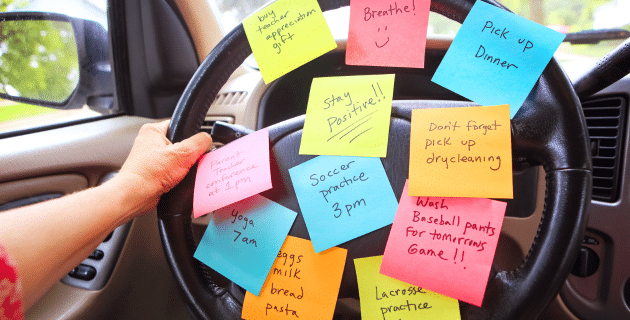
Before we know it, we’ll be going from relaxing summer days to busy fall schedules. With school, sports practices, extracurricular activities, meetings, and more, it can easily become overwhelming.
We’ve researched some effective ways to take control of our busy schedules. Follow these tips and, hopefully, you’ll find some much-needed time for yourself, too.
Stay on top of the little things so they don’t create last minute rushes.
Stop for gas before the tank is nearly empty. Do your laundry so you don’t have to search for that clean shirt. Go food shopping so you have items to pack for lunch. If you put off the small things, they can become big stressors and throw off your schedule.
Use the one-minute rule. If a task will take you one minute or less, do it now.
Hang up your coat. Put your dishes in the dishwasher. Put away all the groceries when you bring them home, even the ones that don’t need refrigeration. Putting off these smaller tasks will just add to your to-do list.
Make large tasks more manageable by doing them in stages.
If you have a big project at work, you probably break it down into smaller parts. Do the same with your household tasks. Clean the bathroom on Monday, the toilet on Tuesday, and so on. Break up larger projects so that it’s easier to fit them into your schedule.
Make sure everything in your house has a home.
You have five minutes before you must leave, and you can’t find your keys. When you declutter, it’s a lot easier to find the things you need at a moment’s notice. Do that not only for your house but for your car and workspace too.
Schedule tasks for the time that you are most productive.
Are you an early morning person or a night owl? Plan tasks for the times that you have the most energy or can focus the best. You’ll be amazed at how much you can accomplish.
Plan for downtime as you wait for pickups or in lines.
Use waiting time for answering emails, reading brief articles, or doing other tasks that take 10-15 minutes. Prepare a list of smaller tasks that you can complete during this time. Some downtime, however, such as sitting in traffic is not right for multitasking. Don’t text and drive, even if your car is not moving.
Create a to-do list with time estimates.
Don’t rely on your memory. Prepare a daily to-do list. Include an estimate of the time each task will take. Star or highlight the tasks that take priority. Then make an informed decision about which tasks you’ll tackle first. Keep your to-do list in sight where you can easily see it.
Pro Tip: Plan the next day’s to-do list at the end of the previous day so you’ll be ready to go.
Reflect and reprioritize.
New tasks pop up all the time. Take a moment midday to reflect on your to-do list. See where you are and what you have yet to do. Update your priorities to tackle the most important tasks.
Create a master calendar for a visual representation of your schedule.
While a to-do list helps with tasks, a calendar displays your daily, weekly, and monthly commitments at-a-glance. Block out activities on your calendar. Color code your calendar by work/personal/family/child. Allow for travel time and make sure to include breaks/downtime.
Set aside different days of the week for different tasks.
Maybe Saturday is for errands. Sunday is for meal prep. Organizing your schedule in this way helps consolidate the same types of tasks. That way, you’re not running to the food store three times a week for groceries. It will end up being a big timesaver.
Reduce time in meetings.
Consider whether a meeting needs to be in person, or if it could be virtual (no travel time). Maybe it could be a call or email. If you do have the meeting, share the agenda in advance. Include times for topics and stick to the schedule.
Avoid distractions from tasks at hand.
Texts and emails can interrupt your workday and family time. Put your phone on silent or wear headphones. Wait until your break to check your phone. Considering checking email at a designated time (e.g., every hour or every couple of hours) rather than all the time.
Don’t be afraid to delegate.
You don’t have to do everything. Don’t accept more responsibility than you can realistically handle. See if there is someone at work or in your family who can take over some of your workload. Consider paying a professional to handle some of your tasks. There are services that handle errands, housekeeping, meal prep, and more.
Use digital tools.
There are many technology tools that can help you organize from calendar apps to digital to-do lists. Some popular tools include ClickUp, Google Tasks, Notion, RescueTime, and Todoist.
Schedule time for yourself.
You do everything for everyone. Make sure you make time to relax and recharge. Block off time for lunch. Schedule time for self-care, including favorite hobbies, time with friends, and time away. You’ll emerge refreshed and ready to take on a new day.
This article is furnished by California Casualty, providing auto and home insurance to educators, law enforcement officers, firefighters, and nurses. Get a quote at 1.866.704.8614 or www.calcas.com.

by California Casualty | Health, Homeowners Insurance Info |
Creepy, crawly, and flying insects are okay outdoors, but you don’t want them in your home. Yet sometimes they make their way inside.
We researched tried-and-true methods to remove bugs indoors. Follow this handy guide to get rid of what bugs you this summer.
Common bugs in your home
Crumbs of food and a reliable water source can attract ants to your house. When it’s too warm or wet outside, spiders may venture in, especially if there are other bugs in your home to eat. Flies, bees, and wasps love rotting fruit, and flies flock to garbage. Light, trash, and food also attract beetles. Weevils hitch a ride in your groceries, via eggs laid by adults in products like rice. Other common bugs include earwigs, firebrats, centipedes, silverfish, cockroaches, bedbugs, termites, and if you have pets: fleas and ticks.
Steps to take to combat bugs
While these buggy visitors may be common, they’re certainly not welcome. Here’s what you can do about it.
Step 1: Seal cracks and openings.
Bugs often crawl in through tiny cracks or holes in window screens and around windows and doors. Carefully check all these potential openings.
- Close up holes by replacing screens, caulking openings, or applying weatherstripping.
- Caulk is generally used for cracks near stationary items, while weatherstripping is for things that move such as doors and windows.
- Don’t forget to check where electrical lines and pipes enter your house. Canned spray foam can help to seal these openings.
Step 2: Clean the kitchen.
Bugs feast on your crumbs. They eat flour, cereal, baking mix, crackers, dried pasta, dried fruits, nuts, popcorn, and pet food. Ants especially like sweets.
- Wipe down cutting boards and counters after food prep.
- Keep food in sealed containers and/or in the fridge or freezer.
- Put a lid on your garbage can and empty it regularly.
- Clean the crumbs from your microwave, stove, toaster ovens, and other appliances.
Step 3: Beware of hitchhiking bugs.
Some bugs come in with items that you bring into the house, such as groceries, or even your pets.
- Meal moths, weevils and beetles love the grains and cereals in your pantry. Store those items in glass, metal, or sturdy plastic containers with airtight lids.
- If you notice bugs in your pantry in one container, check the ones next to it. Throw away any boxes with bugs. Remove all items from the pantry and clean the shelves with soap and water.
- Pro Tip: Freeze any items for 3-4 days or heat them in a 140F degree oven for an hour or two to kill insects and eggs.
- For those bugs getting a free ride on your fur babies, keep pets up to date on flea and tick Check them for fleas and ticks regularly.
Step 4: Clean and declutter.
Bugs look for shelter, and they will find it among your clutter. Vacuum and keep your home neat to help keep bugs at bay.
- Avoid piles of newspapers and stacks of boxes where spiders and cockroaches love to live.
- Even piles of dirty laundry can be home to bugs. That’s a good reason to put clothes away.
- Make sure to declutter and donate items that you no longer use.
- Store firewood outside and away from the house. Check any wood for bugs before you bring it inside.
Step 5: Dry areas that are damp.
Bugs also look for water. Some prefer damp places, such as drain flies that live in your kitchen sink and bathtub drains. If you can dry the areas that are damp, that will help eliminate bugs.
- Fix leaky faucets, drains, and pipes as a first defense.
- In areas where it’s typically damp, like a basement, use a dehumidifier.
- Make sure washing machines and dishwashers are working correctly and not leaking.
Step 6: Use the scents that bugs hate.
Certain scents repel bugs. Fortunately, these same scents usually smell pretty good to humans.
- Peppermint repels ants, mosquitos, and spiders. Put some essential oil on a cotton ball and adjust the strength as needed.
- Tea tree and citronella oils also work well in keeping away a range of pests.
- Spiders don’t like onions. Slice some and put them in a bowl of water.
- Many brands of fabric softener sheets contain a compound, linalool, which has a scent hated by mosquitos and other flying insects.
Step 8: Place bug traps.
You can find bug-specific traps on the market, or you can make your own.
- Sticky flypaper will trap flies and gnats. Be sure to hang it up and away from your pets.
- Ant bait traps use various insecticides. Keep them out of reach of pets and toddlers. For a nontoxic ant remedy, sprinkle some cornmeal. Ants like to eat it but cannot digest it.
- For fruit flies, put apple cider vinegar in a small bowl. Cover it with plastic wrap and punch holes in it. The fruit flies will be attracted to the vinegar and get trapped beneath the plastic.
Your home is one of your greatest investments. Perform regular home maintenance and insure your home for added peace of mind.
This article is furnished by California Casualty, providing auto and home insurance to educators, law enforcement officers, firefighters, and nurses. Get a quote at 1.866.704.8614 or www.calcas.com.
by California Casualty | Auto Insurance Info |
Brrrr…it’s cold out there. But those freezing temperatures don’t just affect us. They can also impact our cars, some even to the point where they may not start or function.
Here’s a quick checklist to help you know what to look for, and what to do, to ease the effects of frigid temps on your vehicle.
Check your tires.
A lot is riding on your tires. You want them to grip the road in all conditions, whether dry or wet, snowy or icy. However, as temperatures dip, so does the pressure in your car’s tires. That underinflation can result in serious safety issues. Underinflated tires can cause your car to lose traction, and slip and slide in wet conditions. The tires’ treads can wear unevenly. You could even be at risk for a tire blowout. Having the right tire pressure helps with a safe ride and also improves gas mileage.
What to do: Check your tire’s air pressure at least once a week and fill your tire as needed to manufacturer’s specifications. Consider getting winter tires that perform better on snowy surfaces if you live in a place with frigid temperatures.
Check the battery.
Batteries help start our cars and power electrical features. Most batteries use a chemical reaction with lead acid to generate the electric current. In freezing temperatures, this reaction is slower and your battery’s power is reduced. That means it may not have enough “juice” to start at all. This is especially true for older or weaker batteries.
What to do: If your car doesn’t start immediately, turn off the lights, heater, radio, phone chargers, and anything that is powered by your battery. Try starting your car again to see if that helps. If not, use jumper cables to get your vehicle going. In general, keep battery connections clean and free of corrosion, which will help it work to its best potential. Also, consider a battery warmer. Finally, replace your battery if it is more than 3 years old. If you’re unsure of your battery’s life, have it tested. Many auto shops offer that service for free.
Are you driving an Electric Vehicle (EV)? Cold can affect your battery too. There’s less energy for acceleration and your range may decrease. Preheat your EV before going out. Be prepared for longer charging times in winter months.
Check your fluids.
Freezing temperatures can affect your car’s oil, coolant, and transmission fluids. When it’s very cold, these fluids become so thick that the engine cannot circulate them, or has to work harder to do so. Without these essential fluids, your vehicle cannot operate properly or sometimes at all. With a lack of oil, your engine isn’t lubricated. With a lack of transmission fluid, your car struggles to switch gears. With a lack of coolant, your engine can overheat. The frozen coolant can also crack and damage your radiator hoses.
What to do: Let your car warm up fully before driving. Switch to low-viscosity oils, or synthetic oils, which flow more easily when it’s cold. Make sure there is a proper ratio of antifreeze (coolant) to distilled water. An improper mix can have a higher freezing point. You can check your coolant’s freeze point with a refractometer. Also, winter is a good time to have your transmission fluid checked and replaced if needed.
Fill your gas tank.
Gas will not freeze unless it’s 100 degrees below zero. But water in your gas tank or lines can become ice that clogs the system. The ice can make it hard to start your car or give you a sputtery ride. It also can leave you stranded with your car unable to go anywhere.
What to do: Keep your gas tank at least half full to avoid this problem. If you do get stranded with a frozen fuel line, you can get your car towed to a warm location. You also can try adding gas and/or fuel line antifreeze to the tank.
Let screens warm up.
You may notice your liquid crystal display (LCD) screens being slow in the cold. That’s because the molecules in LCDs slow down when the temperature drops.
What to do: Wait for the car to warm up, and the screens should resume their normal speed. You can install an engine block heater to help things along or park in a warmer place like a garage to minimize the cold’s effects.
Clear your windshields.
On a cold day, your breath could condense and freeze on the inside of your windshield. Keep your windshields as clear as possible with the defrost function. Windshield washer fluid also may not work as well in the cold. It may be unable to spray because it’s frozen.
What to do: You can buy windshield washer fluid that is made for cold temperatures. Even so, it could freeze, so make sure your car is warmed up before using it. Also, check that your car’s defrost system is in good working order.
Check the rubber on wipers and doors.
Freezing temps can cause the rubber on your windshield wiper blades to become brittle. They could easily tear or crack, which creates blurry windshields—a recipe for car accidents. In addition, doors can freeze shut in cold temperatures, which is an added annoyance.
What to do: Consider buying winter wiper blades that are made to hold up to cold temperatures. Make sure you replace your wiper blades when they are worn. For frozen car doors, try using silicone spray on the rubber door gaskets to keep them from freezing shut.
Check your belts and hoses.
Older serpentine belts may be brittle and can break when they get cold. They also may be so cold that they don’t bend as they should. Cold weather can also take its toll on your coolant hoses. A bad belt can continue to function but there often are signs that it is failing and needs to be replaced. Listen to noises your car may make to indicate that and other problems.
What to do: Have your mechanic check the drive belt system and coolant hoses at every oil change. Replace parts when they show signs of wear and tear.
Remember, your car is one of your greatest investments. Keep it well-maintained all winter long and don’t forget to protect it with the right insurance.
This article is furnished by California Casualty, providing auto and home insurance to educators, law enforcement officers, firefighters, and nurses. Get a quote at 1.866.704.8614 or www.calcas.com.
by California Casualty | Auto Insurance Info |
Brrrr…it’s cold out there. But those freezing temperatures don’t just affect us. They can also impact our cars, some even to the point where they may not start or function.
Here’s a quick checklist to help you know what to look for, and what to do, to ease the effects of frigid temps on your vehicle.
Check your tires.
A lot is riding on your tires. You want them to grip the road in all conditions, whether dry or wet, snowy or icy. However, as temperatures dip, so does the pressure in your car’s tires. That underinflation can result in serious safety issues. Underinflated tires can cause your car to lose traction, and slip and slide in wet conditions. The tires’ treads can wear unevenly. You could even be at risk for a tire blowout. Having the right tire pressure helps with a safe ride and also improves gas mileage.
What to do: Check your tire’s air pressure at least once a week and fill your tire as needed to manufacturer’s specifications. Consider getting winter tires that perform better on snowy surfaces if you live in a place with frigid temperatures.
Check the battery.
Batteries help start our cars and power electrical features. Most batteries use a chemical reaction with lead acid to generate the electric current. In freezing temperatures, this reaction is slower and your battery’s power is reduced. That means it may not have enough “juice” to start at all. This is especially true for older or weaker batteries.
What to do: If your car doesn’t start immediately, turn off the lights, heater, radio, phone chargers, and anything that is powered by your battery. Try starting your car again to see if that helps. If not, use jumper cables to get your vehicle going. In general, keep battery connections clean and free of corrosion, which will help it work to its best potential. Also, consider a battery warmer. Finally, replace your battery if it is more than 3 years old. If you’re unsure of your battery’s life, have it tested. Many auto shops offer that service for free.
Are you driving an Electric Vehicle (EV)? Cold can affect your battery too. There’s less energy for acceleration and your range may decrease. Preheat your EV before going out. Be prepared for longer charging times in winter months.
Check your fluids.
Freezing temperatures can affect your car’s oil, coolant, and transmission fluids. When it’s very cold, these fluids become so thick that the engine cannot circulate them, or has to work harder to do so. Without these essential fluids, your vehicle cannot operate properly or sometimes at all. With a lack of oil, your engine isn’t lubricated. With a lack of transmission fluid, your car struggles to switch gears. With a lack of coolant, your engine can overheat. The frozen coolant can also crack and damage your radiator hoses.
What to do: Let your car warm up fully before driving. Switch to low-viscosity oils, or synthetic oils, which flow more easily when it’s cold. Make sure there is a proper ratio of antifreeze (coolant) to distilled water. An improper mix can have a higher freezing point. You can check your coolant’s freeze point with a refractometer. Also, winter is a good time to have your transmission fluid checked and replaced if needed.
Fill your gas tank.
Gas will not freeze unless it’s 100 degrees below zero. But water in your gas tank or lines can become ice that clogs the system. The ice can make it hard to start your car or give you a sputtery ride. It also can leave you stranded with your car unable to go anywhere.
What to do: Keep your gas tank at least half full to avoid this problem. If you do get stranded with a frozen fuel line, you can get your car towed to a warm location. You also can try adding gas and/or fuel line antifreeze to the tank.
Let screens warm up.
You may notice your liquid crystal display (LCD) screens being slow in the cold. That’s because the molecules in LCDs slow down when the temperature drops.
What to do: Wait for the car to warm up, and the screens should resume their normal speed. You can install an engine block heater to help things along or park in a warmer place like a garage to minimize the cold’s effects.
Clear your windshields.
On a cold day, your breath could condense and freeze on the inside of your windshield. Keep your windshields as clear as possible with the defrost function. Windshield washer fluid also may not work as well in the cold. It may be unable to spray because it’s frozen.
What to do: You can buy windshield washer fluid that is made for cold temperatures. Even so, it could freeze, so make sure your car is warmed up before using it. Also check that your car’s defrost system is in good working order.
Check the rubber on wipers and doors.
Freezing temps can cause the rubber on your windshield wiper blades to become brittle. They could easily tear or crack, which creates blurry windshields—a recipe for car accidents. In addition, doors can freeze shut in cold temperatures, which is an added annoyance.
What to do: Consider buying winter wiper blades which are made to hold up to cold temperatures. Make sure you replace your wiper blades when they are worn. For frozen car doors, try using silicone spray on the rubber door gaskets to keep them from freezing shut.
Check your belts and hoses.
Older serpentine belts may be brittle and can break when they get cold. They also may be so cold that they don’t bend as they should. Cold weather can also take its toll on your coolant hoses. A bad belt can continue to function but there often are signs that it is failing and needs to be replaced. Listen to noises your car may make to indicate that and other problems.
What to do: Have your mechanic check the drive belt system and coolant hoses at every oil change. Replace parts when they show signs of wear and tear.
Your car is one of your greatest investments. Keep it well-maintained and protect it with the right insurance.
This article is furnished by California Casualty, providing auto and home insurance to educators, law enforcement officers, firefighters, and nurses. Get a quote at 1.866.704.8614 or www.calcas.com.