
by California Casualty | Educators |
Our Education Blogger is a public school teacher with over a decade of experience. She’s an active NEA member and enjoys writing about her experiences in the classroom.
I know it sounds a little strange, but this one helps me stay on track. Each day I have a specific task I aim to complete. For example, on Mondays I plan out my math lessons and on Fridays I re-evaluate my upcoming lessons in case we lagged behind or got ahead that week. Also, I always reserve about 10 minutes each plan time for parent or colleague communication (save the lengthier conversations for an after-school conference).
Plan time is a vital part of a teacher’s day. It’s when the “magic” happens, or at least, it’s supposed to. If you’re like me, plan time mysteriously disappears, taken up by “quick” conversations with a colleague, getting students caught up on work, or communicating with parents, leaving you with little to no time to plan before your next class begins.
After a decade of teaching, I feel like I’ve finally figured out how to make the most of my plan time. While some are blatantly obvious, these 6 little nuggets of wisdom may be just what you need to take back your plan time.
Use A Planner
Find a tool to help you plan your week, month, year. Having everything in one place, and being able to see a week, or month, at a glance is helpful. Create a digital template, or make one by hand. Choose from one of the hundreds of editable lesson planner templates available like this basic lesson plan template from Angie Amos on Teachers Pay Teachers.
Shut Your Door
I know. It’s hard. You don’t want to seem unfriendly or unwelcoming. However, if you are swamped with grading and planning, this is one step you can’t avoid. If you feel it necessary, you can even make a little note to stick on your door explaining that you’d LOVE to visit, but you have work to complete. Uninterrupted plan time is precious!
Avoid Scheduling Meetings
Some of us have little control over this one. However, in my building, our plan time is OUR plan time. Plan time isn’t allowed to be used for IEP meetings, conferences, or evaluations. If you can, request that meetings be held at times other than your plan time.
Delegate Work
If you have teacher’s aides, use them (please don’t ask your paraprofessional if they can help you with work, their job is to help students). If not, ask a parent volunteer to help throughout the week. Jobs like making copies, cutting, stapling, sorting, and hanging papers on bulletin boards are ideal for aides or volunteers. These tasks take up a surprisingly large amount of time, so let someone else help you out!
Recruit Student Help
Use peer tutors to assist students who have been absent or who need extra help with assignments. Offer peer tutors an incentive for their help.
Each school year and each day are different. See what works best for you. Don’t be afraid to protect your vital plan time!
This article is furnished by California Casualty, providing auto and home insurance to educators, law enforcement officers, firefighters, and nurses. Get a quote at 1.866.704.8614 or www.calcas.com.
by California Casualty | Calcas Connection, In Your Community |
It’s been quite a year for educators. California Casualty is glad to celebrate the progress made despite challenging times.
Once again, we had a great opportunity to meet with the delegates at the annual NEA Representative Assembly (NEA RA), held this July in Minneapolis, and explain the benefits of the NEA Auto & Home Insurance Program provided by California Casualty.
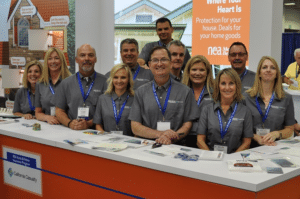 Gathering with 6,000 representatives from around the country is always inspiring. The passion for students and public schools always impresses us. It’s wonderful to reconnect with old friends (many of whom are longtime policyholders) and get introduced to new ones, sharing the importance of membership to an organization like the NEA that fights for the rights of teachers and education support professionals.
Brian Goodman, Assistant Vice President of Field Relations, was working feverishly to catch up with as many NEA members as he could. “The NEA RA is really a remarkable event. It is rewarding to see our genuine leadership connections from across the country and get a chance to interact with 6,000 NEA leaders at one location,” he said.
California Casualty Senior Vice President Doug Goldberg concurs. “This year, the passion and energy at the RA was palpable, understandably with all of the external pressures facing public education,” he said.
Assistant Vice President Lisa Almeida added, “In my 13 years attending the Assembly, this was the best ever. Meeting with NEA leaders from across the country and hearing about their positive interactions with California Casualty and their local Field Marketing Managers is so gratifying.”
Doug said that NEA members took notice of the value and attention they receive from California Casualty. “We learned over handshakes and hugs with our friends and customers how much they appreciate the NEA, NEA Member Benefits and partners like California Casualty. In one example, a past NEA president sought us out to say he’d be switching over soon. The presidents of a couple states’ two largest locals also came to thank us for our local representation.”
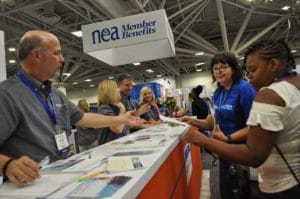
Field Relations Vice President Debbie Harris summed it up with, “We often hear praise from delegates about our local reps from their states. They see us as friends and partners. Those relationships are priceless.”
TAKEAWAY:
We love hearing your California Casualty stories. Share them at our Facebook page, www.facebook.com/CaliforniaCasualty, or tell your colleagues and family about our exceptional service and have them visit www.calcas.com to learn more about what we do and how we serve you.
by California Casualty | Calcas Connection, Good to Know |
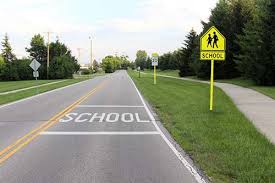
You might be surprised to learn that school zones and bus stops are some of the most dangerous places for kids as they go to and from school. Since it’s been a few months since school has been in session, these safety refreshers can make this back to school season safer for our children:
 SCHOOL ZONES
- Be aware of school zones
- Pay close attention to all school zones along your route. Warning signs, flashing lights and speed bumps are good indicators that a school zone is nearby.
- Never drive distracted, especially in areas where children travel to and from school
- Drinking coffee, texting, talking on the cell phone and completing the morning routine to get ready for the day (applying makeup or shaving) are all distractions.
- Slow down and observe school zone speed limits
- Avoiding the need to rush by building in extra time can save a life. Slamming on the brakes is not the best approach to reducing your speed in a school zone.
- Be patient and expect increased traffic during drop-off and pick-up times
- Don’t get overwhelmed by the controlled chaos. Your patience is greatly appreciated.
- Avoid double parking or blocking crosswalks in school drop-off zones
- Always yield to pedestrians, whether or not they are in the designated crosswalks.
 BUS STOPS
- Yield to buses at all times
- Filled with precious cargo, they deserve the right of way.
- Stop when you see school bus yellow or red flashing lights and the stop arm extended
- Drivers behind the bus as well as those approaching it are required to stop.
- Let students getting off of the bus cross in front of your car and wait to ensure all riders have crossed safely
- Stopping a good distance from the bus will help you to see the students and the students to see you
- Be aware of kids standing at bus stops
- They may accidentally step off of the curb and into your path. Be ready.
Nothing is more valuable than the lives of our children. These simple rules can prevent tragedies and keep our school zones safer for all.
TAKEAWAY: Find a great back to school safety resource at https://www.nsc.org/home-safety/seasonal-safety/back-to-school/drivers
by California Casualty | Behind the Scenes, Calcas Connection |
 We understand that reaching out to your insurance company is not typically a top contender on your list of fun things to do. However, how we answer your call can lead to a surprisingly positive experience.
The small team responsible for the automated phone system that answers your call and routes you to the correct parties knew it was time to refresh the voice prompting callers to choose their appropriate call destination.
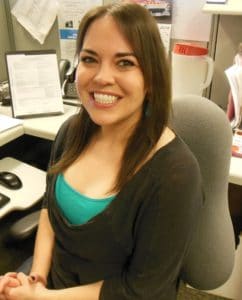
Through a very “scientific” approach of walking around and listening to employees conversing with policyholders, one employee stood out from the rest as the perfect candidate for the project. Her diction was clear and she was highly upbeat and personable.
Let us introduce you to Kelly, the new voice of California Casualty.
Kelly has been with California Casualty for 15 years, interacting with customers in a variety of jobs from Sales, Underwriting, Customer Service and our specialized Agency Services department.
It didn’t surprise Kelly’s manager that she was the top choice for the project. She sits next to Kelly and knows the pride Kelly takes in providing solutions for customers with her “soothing style.”
Kelly was more than happy to help. It felt natural, given her focus on connecting with customers through just her voice. She shared some insight regarding her phone etiquette: “I watch my tone and pace so clients get a clear understanding of what I’m saying and the products we have to offer.”
Here are a few of the compliments Kelly has received from customers:
“Kelly is the most professional, courteous, energetic and kind person I have every spoken with.”
“Kelly was very concise, attentive and very pleasant to speak with.”
Luckily for Kelly (and her manager), it only took a few days in a local studio to get all of the messages recorded. The quick turnaround time just proved again that she was perfect for the project.
The next time you call us, listen carefully. The voice you’ll hear will now have a familiar face.
TAKEAWAY: Reach out to California Casualty and hear Kelly anytime at 1.800.800.9410.
by California Casualty | Educators |
Our Education Blogger is a public school teacher with over a decade of experience. She’s an active NEA member and enjoys writing about her experiences in the classroom.
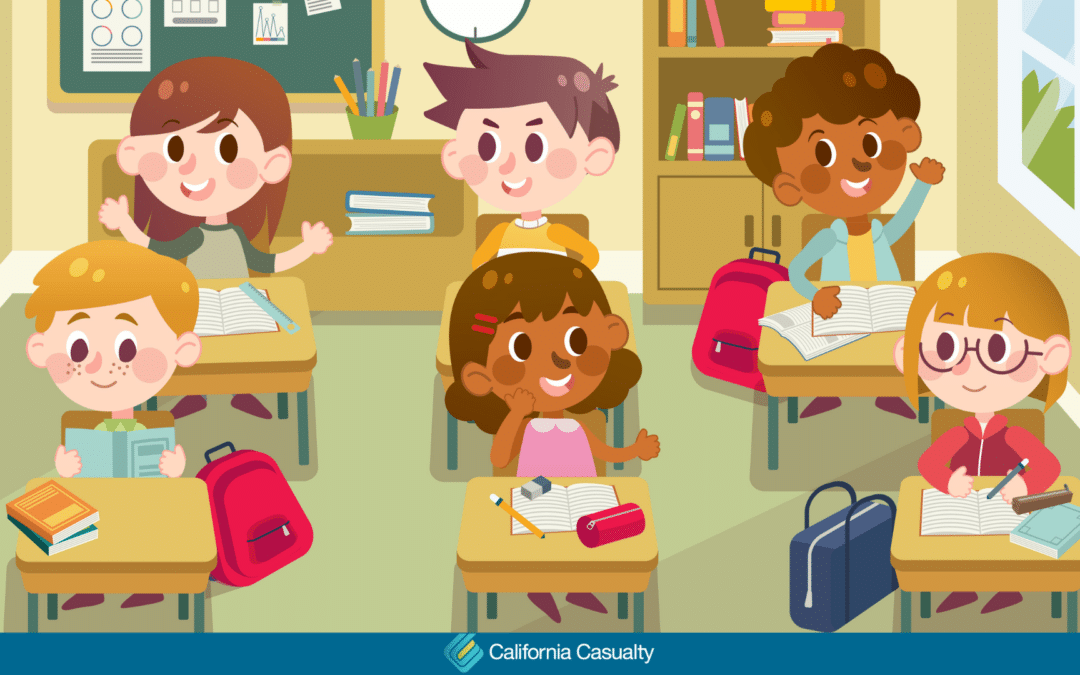
Creating the “perfect” classroom seating arrangement is one of the more challenging aspects of teaching. It seems to be a never-ending puzzle! A good classroom seating arrangement allows students to be focused on learning, and that can only occur when other nuances are addressed.
While you may never be able to achieve the “perfect” classroom seating arrangement, here are some items to ponder so you can come close to it!
1. Prioritize Student Needs
Consider each student’s needs and challenges. Students who are easily distracted should be placed in an area of the room that provides the least amount of possible interruptions. If a student has visual or hearing complications, seat them where they can easily see and hear instruction. A student who needs to leave the room during class time for other services (speech, gifted, etc.) may prefer to be seated near the door to avoid feeling uncomfortable when leaving. A talkative student may need to be situated with as few classmates as possible. Do any students have physical limitations that requires equipment or accessibility?
2. Peer Tutors
Are there students in your class that could potentially be peer teachers to others? Seat these students near others who struggle academically or behaviorally. Be sure to spread them out among your seating arrangement. Don’t overuse this strategy, as it may be uncomfortable for your stronger students. They don’t ALWAYS have to be a peer teacher, sometimes they just enjoy being a student.
3. Student Organization
Allow your less organized students a little extra space. This may be at the end of a row or the corner of a group. If their supplies happen to “overflow,” it won’t cause problems with neighboring students. This is a bigger deal at the elementary level if students keep their supplies in their desks.
4. Teaching Style
Think about your own teaching styles and the desk arrangements that will benefit your instruction. Do you spend most of your time lecturing from a certain location in the classroom? What about classroom technology, like projectors, SmartBoards, or access to laptops? Is group collaboration often used?
Here are a few Free Desk Arrangement Generators to check out:
Scholastic Classroom Set-Up Tool
Classroom Architect
This article is furnished by California Casualty, providing auto and home insurance to educators, law enforcement officers, firefighters and nurses. Get a quote at 1.800.800.9410 or www.calcas.com.