by California Casualty | Auto Insurance Info |
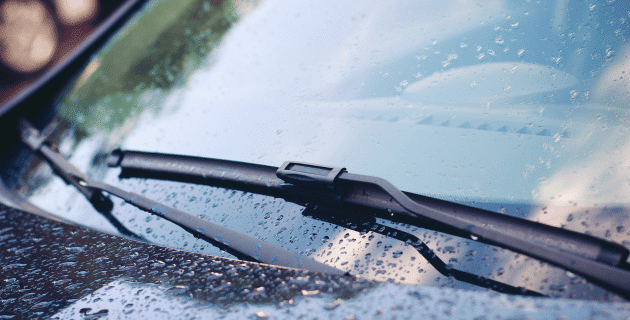
If your windshield wipers are leaving long streaks and making loud squeaks, they’re trying to tell you something. They’re ready to be replaced.
Your wipers are not meant to last forever. The rubbery blade wears down over time. Squeaks, streaks, and smears happen when the blades don’t make proper contact with the glass. That causes dangerous driving conditions and potential accidents when you can’t see clearly through your windshield.
You generally have to replace your wiper blades every 6-12 months. Look for these signs that your blades are ready for replacement:
• Worn edges
• Cracks, tears, and missing pieces
• Stiffness in the rubbery part (inability to flex)
• Squeaking or chattering
• Streaks on your windshield
If your wipers are leaving streaks but not making sounds, you can clean the blades, which are the rubbery part of your wiper. Dip a rag or paper towel into rubbing alcohol. Wipe it along the blades, and the windshield. This can help extend the life of your blades for another month or two before you have to replace them.
How to replace your wipers
Step #1: Get the right wipers for your vehicle.
Windshield wiper blades come in many different sizes so it’s important to get the right ones. Your vehicle may even use two different lengths of front wiper blades. (Don’t forget your rear one, too.) One way to find the right size(s) is read your car’s manual. You also can go to an auto parts store in person or online to get assistance. The online sites will often have you type in your car’s make and model.
Once you find the right size, you’ll have other choices to make. Conventional and synthetic rubber blades are usually the cheapest. They will break down over time with exposure to the sun’s UV rays. If you are looking for longer-lasting blades, consider silicone, which is more expensive. There are options for sturdy winter wipers, flat blades, and hybrid blades, too. The difference is that with the conventional kind, you can replace just the rubbery blade. With the others, you have to replace the whole piece.
Many national auto parts stores will install the wipers that you just bought there, sometimes for no additional charge.
Step #2: Get the wipers in position.
You’re ready to start the replacement. Turn the car on and give your windshield a squirt of wiper fluid to lubricate it. Then, turn on the wipers just so you can get them into position. When the two blades are pointed upward toward your roof, turn your car off. Get out of your car and pull the wipers forward so they’re standing upright at 90 degrees.
Step #3: Place a towel on the glass.
Wiper blades are spring-loaded. That means that they can snap back against the windshield. Once you expose the metal wiper arm, this could result in a cracked windshield. To protect against that, cover your windshield with towels. Alternatively, you could wrap the metal hook of the wiper arms with a rag once you detach the blades.
Step #4: Detach the blades.
There are two basic types of traditional wiper connections: tab and pin type. There is a slightly different installation process for each type.
Look for the spot on the wiper where the blade attaches to the arm. There may be a tab where the blade connects. If you don’t have a tab, you may have a pin-type connector. If in doubt, check your vehicle’s user manual for blade removal steps.
• For tab connectors, use your finger to push the tab outwards or inwards. As you push, grab the blade and pull it down parallel to the arm. You should be able to pull it all the way out. You may need to tug a bit if there’s built-up debris.
• For pin-type connectors, you will need to pull the tab up, and pull the pin out. Use a small flathead screwdriver to lift the connecting pin. You should then be able to slide the blade off.
Step #5: Install the new blades.
Remove the new blades from their packaging and then proceed depending upon the type of connection.
• For tab connectors, look for a tab suspended in the middle of a long rectangular hole. Slide the arm hook up and over the tab. Pull the blade up until you hear a snap.
• For pin-type connectors, look at the new blade and look for a small hole in the body. Pull the black tab up slightly. Align the hole with the pin on the wiper and it will snap into place.
Step #6: Clean the windshield.
You’ve got new wipers so you’ll want to make sure your windshield is clean, too. Lift the blades up so they are off of the windshield. Use automotive glass cleaner, a clean and dry microfiber cloth, and a little elbow grease. Alternatively, you can use water, dishwashing liquid, and a few drops of vinegar. Dry your windshield with a clean microfiber cloth. Put your blades back down and you’re ready to go.
If you just want to replace the rubber inserts
You can replace the entire windshield wiper assembly (as described above) or you can simply buy new blade inserts if they are available for your vehicle. This can save you money; however, it is a bit more complicated to replace just the rubber and may require tools. Consult your car’s manual for details.
Replacing wiper blades is part of good car maintenance. And as always, don’t forget to protect your vehicle with the right insurance for added peace of mind.
This article is furnished by California Casualty, providing auto and home insurance to educators, law enforcement officers, firefighters, and nurses. Get a quote at 1.866.704.8614 or www.calcas.com.
by California Casualty | Auto Insurance Info |
Brrrr…it’s cold out there. But those freezing temperatures don’t just affect us. They can also impact our cars, some even to the point where they may not start or function.
Here’s a quick checklist to help you know what to look for, and what to do, to ease the effects of frigid temps on your vehicle.
Check your tires.
A lot is riding on your tires. You want them to grip the road in all conditions, whether dry or wet, snowy or icy. However, as temperatures dip, so does the pressure in your car’s tires. That underinflation can result in serious safety issues. Underinflated tires can cause your car to lose traction, and slip and slide in wet conditions. The tires’ treads can wear unevenly. You could even be at risk for a tire blowout. Having the right tire pressure helps with a safe ride and also improves gas mileage.
What to do: Check your tire’s air pressure at least once a week and fill your tire as needed to manufacturer’s specifications. Consider getting winter tires that perform better on snowy surfaces if you live in a place with frigid temperatures.
Check the battery.
Batteries help start our cars and power electrical features. Most batteries use a chemical reaction with lead acid to generate the electric current. In freezing temperatures, this reaction is slower and your battery’s power is reduced. That means it may not have enough “juice” to start at all. This is especially true for older or weaker batteries.
What to do: If your car doesn’t start immediately, turn off the lights, heater, radio, phone chargers, and anything that is powered by your battery. Try starting your car again to see if that helps. If not, use jumper cables to get your vehicle going. In general, keep battery connections clean and free of corrosion, which will help it work to its best potential. Also, consider a battery warmer. Finally, replace your battery if it is more than 3 years old. If you’re unsure of your battery’s life, have it tested. Many auto shops offer that service for free.
Are you driving an Electric Vehicle (EV)? Cold can affect your battery too. There’s less energy for acceleration and your range may decrease. Preheat your EV before going out. Be prepared for longer charging times in winter months.
Check your fluids.
Freezing temperatures can affect your car’s oil, coolant, and transmission fluids. When it’s very cold, these fluids become so thick that the engine cannot circulate them, or has to work harder to do so. Without these essential fluids, your vehicle cannot operate properly or sometimes at all. With a lack of oil, your engine isn’t lubricated. With a lack of transmission fluid, your car struggles to switch gears. With a lack of coolant, your engine can overheat. The frozen coolant can also crack and damage your radiator hoses.
What to do: Let your car warm up fully before driving. Switch to low-viscosity oils, or synthetic oils, which flow more easily when it’s cold. Make sure there is a proper ratio of antifreeze (coolant) to distilled water. An improper mix can have a higher freezing point. You can check your coolant’s freeze point with a refractometer. Also, winter is a good time to have your transmission fluid checked and replaced if needed.
Fill your gas tank.
Gas will not freeze unless it’s 100 degrees below zero. But water in your gas tank or lines can become ice that clogs the system. The ice can make it hard to start your car or give you a sputtery ride. It also can leave you stranded with your car unable to go anywhere.
What to do: Keep your gas tank at least half full to avoid this problem. If you do get stranded with a frozen fuel line, you can get your car towed to a warm location. You also can try adding gas and/or fuel line antifreeze to the tank.
Let screens warm up.
You may notice your liquid crystal display (LCD) screens being slow in the cold. That’s because the molecules in LCDs slow down when the temperature drops.
What to do: Wait for the car to warm up, and the screens should resume their normal speed. You can install an engine block heater to help things along or park in a warmer place like a garage to minimize the cold’s effects.
Clear your windshields.
On a cold day, your breath could condense and freeze on the inside of your windshield. Keep your windshields as clear as possible with the defrost function. Windshield washer fluid also may not work as well in the cold. It may be unable to spray because it’s frozen.
What to do: You can buy windshield washer fluid that is made for cold temperatures. Even so, it could freeze, so make sure your car is warmed up before using it. Also, check that your car’s defrost system is in good working order.
Check the rubber on wipers and doors.
Freezing temps can cause the rubber on your windshield wiper blades to become brittle. They could easily tear or crack, which creates blurry windshields—a recipe for car accidents. In addition, doors can freeze shut in cold temperatures, which is an added annoyance.
What to do: Consider buying winter wiper blades that are made to hold up to cold temperatures. Make sure you replace your wiper blades when they are worn. For frozen car doors, try using silicone spray on the rubber door gaskets to keep them from freezing shut.
Check your belts and hoses.
Older serpentine belts may be brittle and can break when they get cold. They also may be so cold that they don’t bend as they should. Cold weather can also take its toll on your coolant hoses. A bad belt can continue to function but there often are signs that it is failing and needs to be replaced. Listen to noises your car may make to indicate that and other problems.
What to do: Have your mechanic check the drive belt system and coolant hoses at every oil change. Replace parts when they show signs of wear and tear.
Remember, your car is one of your greatest investments. Keep it well-maintained all winter long and don’t forget to protect it with the right insurance.
This article is furnished by California Casualty, providing auto and home insurance to educators, law enforcement officers, firefighters, and nurses. Get a quote at 1.866.704.8614 or www.calcas.com.

by California Casualty | Auto Insurance Info, Finances, Homeowners Insurance Info |
From groceries to gas, it seems like we’re paying more for everything these days. Now insurance rates are increasing as well. Why is this happening, and more importantly, what can we do about it? Here’s what you need to know.
What we’re seeing…
Car insurance rates rose 9% over the course of 2022, a trend that is expected to continue with another 7% rate growth in 2023 according to Insurify. Home insurance rates increased by an average of 12.1% in 2021, and another 3% in 2022 said Bankrate.com. Experts predict rate increases each year for the next few years due to the perfect storm of inflation, supply chain issues, weather changes, and other factors.
We’re experiencing historic inflation.
Inflation is at its highest level in decades. Inflation has had a significant impact on the cost of auto parts and labor, as well as medical expenses for bodily injuries.
From March 2021 to March 2022, here’s how prices have increased:
-
-
- Medical services – increased 2.9%
- Auto repair costs – increased 4.9%
- Car rental costs – increased 13.8%
- Used vehicles – increased 35.3%
Similarly, the costs associated with a home claim also have been affected by inflation. This includes additional temporary living expenses, replacement of personal property and home furnishings, cost of construction labor, and costs of construction supplies.
From March 2021 to March 2022, here’s how prices have increased:
-
-
- Rent – increased 5.1%
- Home furnishings – increased 10.1%
- Construction labor and trade services – increased 21.3%
- Construction materials and goods – increased 22.2%
Supply Chain Issues
There are supply chain issues created by the pandemic and by a labor shortage. When we can’t get parts or supplies to repair a vehicle or a home, the process becomes lengthier and results in repairs simply costing more.
Other Factors
The severity and frequency of vehicle accidents are on the rise. Traffic fatalities reached a 16-year high in 2021 according to the National Highway Traffic Safety Administration, due to an increased trend in post-pandemic risky driving behaviors – speeding, driving distracted, not wearing seatbelts, and driving under the influence. This rise in accidents directly affects claims, which contributes to rising auto insurance costs.
Similar conditions come into play for home insurance costs. The number of extreme climate events and weather disasters is also increasing. In 2022, there were 18 disasters with losses of more than $1 billion each, according to the National Centers for Environmental Information.
An inside look at how this affects your insurance rate
As material and labor costs rise, the cost to repair and replace damaged homes and vehicles increases. Factor in the ongoing supply chain issues and costs increase even more. The amount you pay for insurance is likely to go up when the cost to settle claims rises.
“But I’ve never been in an accident, so why would my rate go up?”
Even if you have a spotless driving record or never filed a claim, it’s likely that your insurance costs could be impacted due to economic factors that are out of your control – regardless of the company that provides your coverage. Insurers across the country have been raising rates, some multiple times in the past 12 months. However, it’s not all doom and gloom. There are ways you may be able to reduce your costs.
What You Can Do to Lower Your Premiums
Your insurance provider can recommend adjustments that still give you the quality coverage you need but with a lower premium. Start with a thorough policy review and make sure to look at these areas.
• Review deductible options. Generally, the higher your deductible, the lower the cost of your insurance premium. Since the deductible is the amount your insurance provider will subtract from an insurance payout, you’ll have to select a deductible that you’re comfortable paying out-of-pocket after a loss. Note that there can be diminishing returns if you set your deductible much higher than average, so as a consumer, you need to balance the premium savings against the amount you’d be required to pay after a loss.
• Take advantage of discounts. You may qualify for insurance discounts for being part of a professional association, such as groups for teachers, nurses, or first responders. There are also discounts for being retired, good student discounts, setting up automated payments, and for paying in full upfront. You may also receive a discount for quoting online.
• Buy home and auto insurance from the same company. When you bundle your home and auto insurance, you can often qualify for reduced rates, saving hundreds of dollars.
• Remove Gap coverage if no longer needed. When you buy or lease a new vehicle, it starts depreciating once you drive it off the lot. Gap insurance ensures that you will get the full replacement value of your car if it is totaled or stolen. As a car begins to age, this gap goes down and the need for coverage is less.
• Make your home disaster resistant. Talk to your insurance agent about how you can disaster-proof your home. You may be able to save on your premiums by adding storm shutters, reinforcing your roof or buying stronger roof materials, or even clearing brush from around your home. Older homes can be retrofitted to make them better able to withstand earthquakes or other natural disasters. In addition, consider modernizing your heating, plumbing, and electrical systems to reduce the risk of fire and water damage.
• Choose electronic documents rather than mail. This is an easy change that often comes with a discount and can add up in the long run.
• Skip a payment. Some insurance companies allow you to skip payments around the holidays. At California Casualty, you have the option to skip payments during the summer or holiday months when budgets tend to be extra tight. Ask your agent for details.
California Casualty has been slower with rate increases than the bigger carriers. We will always strive to keep our prices as affordable as possible for our members. When we do make rate changes, it is to be able to maintain the financial fortitude to keep our promises to every policyholder during their time of need.
This article is furnished by California Casualty, providing auto and home insurance to educators, law enforcement officers, firefighters, and nurses.
by California Casualty | Auto Insurance Info |
Brrrr…it’s cold out there. But those freezing temperatures don’t just affect us. They can also impact our cars, some even to the point where they may not start or function.
Here’s a quick checklist to help you know what to look for, and what to do, to ease the effects of frigid temps on your vehicle.
Check your tires.
A lot is riding on your tires. You want them to grip the road in all conditions, whether dry or wet, snowy or icy. However, as temperatures dip, so does the pressure in your car’s tires. That underinflation can result in serious safety issues. Underinflated tires can cause your car to lose traction, and slip and slide in wet conditions. The tires’ treads can wear unevenly. You could even be at risk for a tire blowout. Having the right tire pressure helps with a safe ride and also improves gas mileage.
What to do: Check your tire’s air pressure at least once a week and fill your tire as needed to manufacturer’s specifications. Consider getting winter tires that perform better on snowy surfaces if you live in a place with frigid temperatures.
Check the battery.
Batteries help start our cars and power electrical features. Most batteries use a chemical reaction with lead acid to generate the electric current. In freezing temperatures, this reaction is slower and your battery’s power is reduced. That means it may not have enough “juice” to start at all. This is especially true for older or weaker batteries.
What to do: If your car doesn’t start immediately, turn off the lights, heater, radio, phone chargers, and anything that is powered by your battery. Try starting your car again to see if that helps. If not, use jumper cables to get your vehicle going. In general, keep battery connections clean and free of corrosion, which will help it work to its best potential. Also, consider a battery warmer. Finally, replace your battery if it is more than 3 years old. If you’re unsure of your battery’s life, have it tested. Many auto shops offer that service for free.
Are you driving an Electric Vehicle (EV)? Cold can affect your battery too. There’s less energy for acceleration and your range may decrease. Preheat your EV before going out. Be prepared for longer charging times in winter months.
Check your fluids.
Freezing temperatures can affect your car’s oil, coolant, and transmission fluids. When it’s very cold, these fluids become so thick that the engine cannot circulate them, or has to work harder to do so. Without these essential fluids, your vehicle cannot operate properly or sometimes at all. With a lack of oil, your engine isn’t lubricated. With a lack of transmission fluid, your car struggles to switch gears. With a lack of coolant, your engine can overheat. The frozen coolant can also crack and damage your radiator hoses.
What to do: Let your car warm up fully before driving. Switch to low-viscosity oils, or synthetic oils, which flow more easily when it’s cold. Make sure there is a proper ratio of antifreeze (coolant) to distilled water. An improper mix can have a higher freezing point. You can check your coolant’s freeze point with a refractometer. Also, winter is a good time to have your transmission fluid checked and replaced if needed.
Fill your gas tank.
Gas will not freeze unless it’s 100 degrees below zero. But water in your gas tank or lines can become ice that clogs the system. The ice can make it hard to start your car or give you a sputtery ride. It also can leave you stranded with your car unable to go anywhere.
What to do: Keep your gas tank at least half full to avoid this problem. If you do get stranded with a frozen fuel line, you can get your car towed to a warm location. You also can try adding gas and/or fuel line antifreeze to the tank.
Let screens warm up.
You may notice your liquid crystal display (LCD) screens being slow in the cold. That’s because the molecules in LCDs slow down when the temperature drops.
What to do: Wait for the car to warm up, and the screens should resume their normal speed. You can install an engine block heater to help things along or park in a warmer place like a garage to minimize the cold’s effects.
Clear your windshields.
On a cold day, your breath could condense and freeze on the inside of your windshield. Keep your windshields as clear as possible with the defrost function. Windshield washer fluid also may not work as well in the cold. It may be unable to spray because it’s frozen.
What to do: You can buy windshield washer fluid that is made for cold temperatures. Even so, it could freeze, so make sure your car is warmed up before using it. Also check that your car’s defrost system is in good working order.
Check the rubber on wipers and doors.
Freezing temps can cause the rubber on your windshield wiper blades to become brittle. They could easily tear or crack, which creates blurry windshields—a recipe for car accidents. In addition, doors can freeze shut in cold temperatures, which is an added annoyance.
What to do: Consider buying winter wiper blades which are made to hold up to cold temperatures. Make sure you replace your wiper blades when they are worn. For frozen car doors, try using silicone spray on the rubber door gaskets to keep them from freezing shut.
Check your belts and hoses.
Older serpentine belts may be brittle and can break when they get cold. They also may be so cold that they don’t bend as they should. Cold weather can also take its toll on your coolant hoses. A bad belt can continue to function but there often are signs that it is failing and needs to be replaced. Listen to noises your car may make to indicate that and other problems.
What to do: Have your mechanic check the drive belt system and coolant hoses at every oil change. Replace parts when they show signs of wear and tear.
Your car is one of your greatest investments. Keep it well-maintained and protect it with the right insurance.
This article is furnished by California Casualty, providing auto and home insurance to educators, law enforcement officers, firefighters, and nurses. Get a quote at 1.866.704.8614 or www.calcas.com.
by California Casualty | Safety |
When disaster strikes, you may have only minutes to gather your loved ones, your pets, and your belongings, and get on the road. Are you ready?
Whether it’s a flood, fire, or other emergency, there are times when evacuations are necessary. These are often stressful times when you need to move quickly, and might not have time to grab everything you need. Preparing for emergency evacuations ahead of time will help you and your family know exactly what to do, and what to bring with you, in times of crisis.
Here’s what you need to consider when planning to evacuate.
Learn about local disasters and policies.
-
- Your place of work, your children’s school or daycare, and your local community probably have evacuation plans. You’ll want to find out about them, so that you can incorporate that information in your plan if it applies. Ask these places how they communicate about disaster procedures and what their policies are for emergencies and evacuations.
Pack it up.
-
- Pack an emergency kit full of essential items and documentation your family will need that’s ready to go and keep it in a place where you can grab it easily. Make sure it’s one you can carry or transport easily if you have to walk long distances or travel on public transportation in an emergency.
- Pro Tip: Revisit the content of your kit every six months. That’s when food may expire and children’s clothing sizes may change.
-
- You will need nonperishable food, bottled water, and supplies for 3 days. This includes soap, hand sanitizer, disinfecting wipes, and prescription medications. Make sure you include supplies for pets or infants, such as food and formula, and for any special dietary needs for members of your family. Also pack clothes and pajamas for every member of your family, as well as any bedding, pillows and sleeping bags. Finally, bring a first aid kit and all of your devices and chargers, as well as a battery-powered radio to stay on top of news and information.
-
- Keep a small amount of cash or traveler’s checks at home in a safe place where you can access them in case of evacuation. Store important papers in a fireproof, waterproof container that may be grabbed in case of an emergency. These may include birth certificates, marriage certificates, passports, insurance policies, wills and deeds, and even treasured photos.
Plan your escape route.
-
- Plan for the worst-case scenario. You want to make sure that every member of the family can exit your home safely in the event of an active disaster, such as a fire or earthquake.
-
- Draw a floorplan for your home. Use a blank sheet for each floor. Mark 2 escape routes from each room. Hang the drawing at eye level in each child’s room. Make sure children understand the drawings. Do a room tour and point out the exits. Practice using them. Talk about when your children might have to use them.
-
- Plan for which adults are bringing which items packed in the previous section. Dividing the responsibilities will help you get out more quickly.
Know where to go.
-
- Know your options about where you can evacuate. You may choose to evacuate to a shelter in your town, to a local hotel or motel, or to family or friends in another town, away from the danger. It also may depend on the type of disaster. You may not be able to stay local in a widespread flood but might be able to shelter in a hurricane. Download the FEMA App to locate emergency shelters in your area.
-
- If you choose the local shelter, find out the rules. You want to make sure that they can accommodate your family. You’ll also have to make separate arrangements for pets. (See the pet section below.)
-
- Choose destinations in different directions in case the emergency is in one part of town. Have the addresses and phone numbers handy for easy access.
Map it out.
-
- Keep a full tank of gas if evacuation seems necessary. Gas stations may have long lines or not be able to pump during a power outage.
-
- Be familiar with alternate routes in case you cannot take the route you know. Be alert for road hazards, washed-out bridges, and downed power lines. Avoid driving in flooded areas.
-
- Bring a physical map in case you don’t have access to a GPS or if satellites go down or your devices run out of power.
Plan for pets.
-
- You want to protect your pets during a disaster. That means you will need to find them a safe place to shelter, whether it’s with you at a pet-friendly location or at an animal boarding facility. Know that facility’s evacuation plan if they may be in the region.
-
- Pack pet food, leashes, litter boxes, crates, beds, toys, and any other supplies needed by your pet. Bring a copy of updated veterinary records.
-
- Make sure your pet is microchipped and has a proper ID on his or her collar if applicable. Bring a photo of you and your pet together, which can help if for any reason your pet gets separated from you.
Stay in touch.
-
- Establish a place to meet near your home in case you get separated. Choose a place immediately outside (such as the driveway), a little bit further (such as the stop sign at the end of the street), and a location even further (such as the neighborhood grocery store).
-
- Choose an out-of-state contact that you all can call if needed. Update that person when you are evacuating and as you change locations.
Ready, set, go.
Take the 10-minute evacuation challenge. See if you can get your family and belongings in a car in just 10 minutes. Then, practice your evacuation drill regularly.
Finally, check that you have enough insurance to cover your home, car, and possessions in case they are destroyed in a natural disaster or other emergency. You’ll all have peace of mind knowing that you are fully prepared and know exactly what to do.
This article is furnished by California Casualty, providing auto and home insurance to educators, law enforcement officers, firefighters, and nurses. Get a quote at 1.866.704.8614 or www.calcas.com.