
by California Casualty | Auto Insurance Info, Safety |
Late summer riding beckons; open roads, open skies, long days, and beautiful sunsets. The flipside? Extreme heat. And also a transition period of reacquainting yourself with the roads and traffic. Use these tips to keep your bike and yourself cool and safe.
For Your Bike
Keeping your ride cool and running smoothly through the summer usually entails a little extra maintenance. Here are some of the priority areas to fitness-check before setting out.
- Tires – Tire blowouts are usually caused by underinflated, rather than overinflated, tires. Make sure to inflate to the manufacturer’s recommended PSI. And remember that high external temps cause tire pressure to increase due to expanding gas. Check them each week and adjust as necessary. Also keep an eye on the tires’ condition, looking for any cracks, punctures, bulges, or worn tread.
- Fluids – Check oil, brake, coolant, hydraulic fluids, and their reservoirs for debris, condensation, and discoloration or changed consistency. Get them changed if they’re due. Check the water pump and hoses regularly for leaks, cracks, and tears. Pro tip: cover your radiator to keep the engine cool (and protect it from dirt, bugs and UV rays). On the hottest days, avoid stationary idling to prevent engine overheating.
- Gas tank – If your bike has been sitting all winter with fuel in the tank, it might not start up. Drain the tank — if there’s any brown grit in the fuel, your tank has probably rusted. You can take it to a mechanic or DIY by flushing with acid remover. After cleaning, treat the new gasoline with a fuel stabilizer.
- Electrical connections – If your electrical connections aren’t secure, the moisture from humid environments can short the connection and stop your bike from functioning. Inspect all wires and connections to components (including battery) and fasten any loose ones. If they’re corroded, it’s best to replace them.
For You
Riding in extreme heat can increase your chance of health risks, overheating, and accident risk. Follow these tips to stay safe and comfortable.
- Hydration – Staying hydrated is one of the best preventive measures for summer riding. Drink water at every stop and consider purchasing a CamelBak for extended rides. Avoid alcohol, as it can easily dehydrate you.
- Sun safety – Even if it’s overcast, you’re still getting hit by UV rays. Wear sunscreen and reapply to exposed skin as often as possible.
- Clothing – Safe riding means extra layers, even in the summer heat. Here are some hacks to keep you cool in your gear.
- Form-fitting sportswear can keep your body temperature down – look for moisture-wicking fabric.
- A lightweight base layer under your jacket and pants can prevent discomfort and keep you dry.
- When leather pants are too hot, check out specialized jeans that have Kevlar fabric lining and other safety components. Never wear shorts.
- Opt for ventilated summer-weight boots, which allow airflow to cool the feet and ankles.
- Mesh-backed gloves will let you grip the handles while allowing for ventilation – as well as hand protection in case of a fall or skid.
- There are options for jackets that protect while keeping you comfortable in the heat. Ventilated jackets with mesh panels allow for aeration, and many perforated leather jackets come with zip vents, which help you release body heat.
- A proper helmet – required by law in all but 3 states – is safety rule number one. Investing in a breathable, lightweight and ventilated helmet will keep your head (and by extension, your body) cool and protected. The best ones are usually carbon fiber.
Get Re-Accustomed to the Road
If you’ve been traveling mostly by car and are just getting back to the roads on 2 wheels, give yourself some time to re-adjust. You no longer have the wrap-around metal protection of a vehicle, and you may need to fine-tune your reaction time for sharing the road with cars.
Most motorcycle accidents are attributed to unsafe lane changes, car doors, speeding, sudden stops, left-turn accidents, and lane splitting, among others, so make sure you’re visible to the cars around you.
Finally, know the signs of heat stress (check out our article here). It can come on suddenly, so knowledge and prevention are your tools to stay cool and healthy.
This article is furnished by California Casualty, providing auto and home insurance to educators, law enforcement officers, firefighters, and nurses. Get a quote at 1.866.704.8614 or www.calcas.com.
by California Casualty | Auto Insurance Info, Safety |
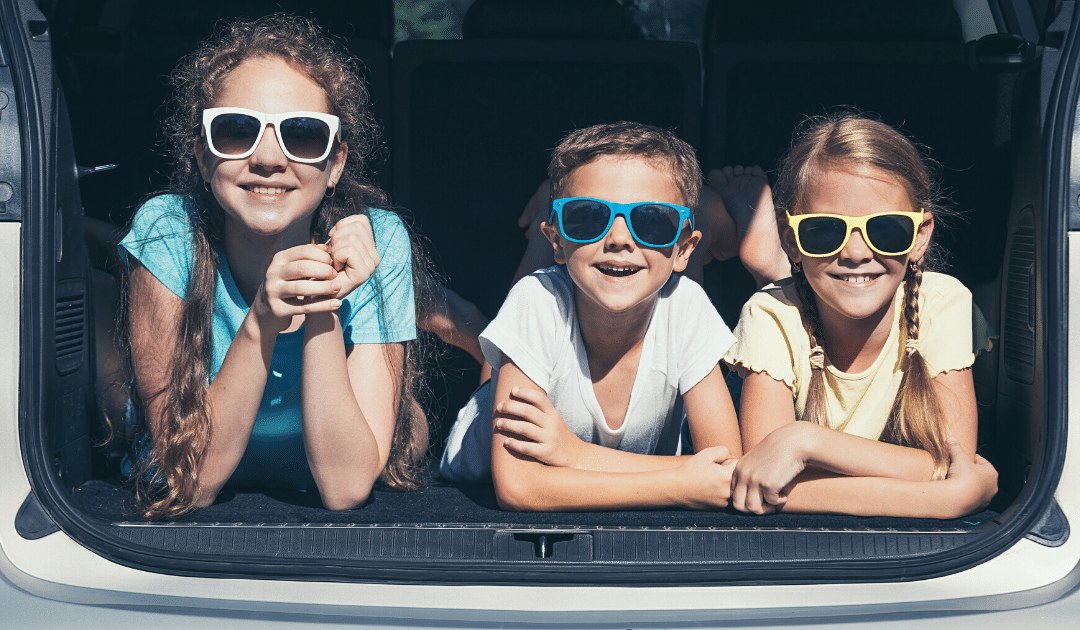
Whether summer road trips beckon or you’re resuming more pre-quarantine activities, increased highway time with your tiny-passenger crew means revisiting best practices for safety.
Check out the following tips for keeping kids safe while in your ride. We’ve also gathered some strategies for keeping your car’s interior safe (and clean) from those same tiny passengers.
The Safety Basics
-
- Always use a car seat. Car seats are designed to protect children from injury or death during vehicle collisions, so choosing the right one and installing it properly tops the list. Check the car seat laws in your state here, and refer to the National Highway Traffic Safety Administration for an in-depth guide on car seats and booster seats.
- Activate child locks to prevent any dangerous mishaps with children accidentally opening doors.
- Use the window locks to keep children from playing with the controls and potentially getting their hand, arm or hair caught in a rolling window.
- Secure safety belts. If there are any unused, loose belts within arm’s reach of your child, secure them so there’s no chance of them becoming an entanglement hazard.
- Never leave a child alone in a car. Not even for a minute. From heat stroke and abduction risk to the possibility of a hit-and-run incident or your child getting loose in the car, the potential of harm is simply too great to chance it.
- Never leave your keys in the ignition or car. Ever-observant, your children have surely seen how you use your keys and, if afforded the chance, could try mimicking your actions.
- Use the back-up camera to avoid hitting children outside your vehicle who may be out of view.
More Child-Proofing
-
- Declutter the car. Any object can become a projectile in an accident, so make sure items are secure or stowed away. Keeping your car clean also decreases the risk of your child grabbing something that might be a choking hazard.
- Use sunshades to protect their delicate skin from harsh UV rays. You can find easy-to-use shades in a variety of shapes, sizes, and styles.
- In-car entertainment. The upside to living in the Age of Screens is that they’re a parent’s best friend in keeping kids distracted and entertained in the car.
- Never drive distracted. Not only does distracted driving endanger you and your children, it sets a bad example for their future driving habits. Eating, texting, inattention, and daydreaming all pull your focus away from the road. So does engaging with your kids in the back seat, which is all the more reason to get everyone set up and settled in before you pull out from the driveway.
- Maintain your vehicle to decrease the chances of overheating, breaking down or getting stranded.
Minimizing the “Mess Orbit” in Your Car
-
- Get a rug or a beach towel to protect underneath the car seat and along the entire seat’s length. It’s easy to remove, shake out, and throw in the washer.
- If you allow food in the car, only allow that which can be vacuumed up (i.e. nothing squishy, mushy or sticky). For liquids, water (in spill-proof cups) tops the list for easiest clean-up.
- Cover the backs of the driver and front passenger seats to protect them from dirty footprints.
- Put cupcake liners in the cupholders to catch those unreachable crumbs.
- Invest in a quality seat protector for leather seats that may become stressed by the car seat’s weight over time.
As with anything else that involves kids, creating habits and routines are often the key to success. When it comes to vehicle safety, adopting best-practice habits will keep your entire crew safer and happier on the road.
This article is furnished by California Casualty, providing auto and home insurance to educators, law enforcement officers, firefighters, and nurses. Get a quote at 1.866.704.8614 or www.calcas.com.

by California Casualty | Homeowners Insurance Info, Safety |
We live for those carefree summer days spent splashing in the water, but they may have a dark side- drowning is the leading cause of unintentional death in children ages 1 to 4. It is often silent and quick, meaning it only takes a few minutes of unsupervised time in the water for a tragedy to unfold.
The good news is that by taking the proper safety measures and establishing rules for your pool, you can decrease the risk level of drowning.
While you and your family are having fun in the sun, remember to follow these important summer pool safety tips.
Assess Your Pool Area
First, take a look at your pool and the area around it. There are several things you can do to improve overall safety:
- Pool barrier – Consider installing a fence around your pool to prevent access by children and pets. A 4-sided barrier reduces drowning risk by 83% compared to a 3-sided fence (one that uses the house as the 4th side). Make sure the barrier is at least 4 feet tall and that gates are self-latching and self-closing.
- Secondary barrier – If your home does open directly to the pool, install door alarms and locks that are out of children’s reach.
- Above-ground pools – Make sure to lock or remove steps/ladders or anything else that can be used for pool access in the absence of adult supervision.
- Pool covers – Power safety covers are your best bet for safety. Keep the control device out of reach of kids and ensure the cover is closed when the pool’s not in use.
- Pet doors – Small children can crawl through pet doors, so ensure there are no doors leading directly to the pool. This keeps both kids and pets safe.
- Drain covers – Install anti-entrapment safety drain covers, which will prevent all-too-common entrapment accidents.
- Underwater pool alarm – Consider installing an underwater pool alarm, which goes off whenever anyone enters the pool. They are surprisingly affordable for the peace of mind they offer.
Establish Rules and Safe Behaviors
Having agreed-upon rules and behaviors sets the tone and parameters for safety. Adopt the following and add your own!
- Don’t go in or near the pool unless an adult or water watcher is present.
- Swim with a buddy.
- No diving.
- No running.
- No pushing.
- Stay away from drains and other areas with suction.
- If someone’s in trouble or struggling, get help immediately.
- For adults, swim sober and only supervise others when you’re not distracted.
Prepare for Emergencies and Know the Risks
Keep the following in mind as an added layer of protection.
- Never leave a child unattended around a pool or hot tub. Stay within arm’s reach of young children and anyone who can’t swim.
- If a child is missing, check the water first.
- A silent killer. Drowning is almost always quiet (and quick), not loud and splashy as depicted on TV. All the more reason for a designated water watcher and for all adults to be on high alert when children are in or near water.
- Make sure all family members know how to swim. Everyone should have basic swimming and/or water competency skills. For children still learning, adult supervision and help with competency is essential.
- Minimize your liability. Pool owners are subject to lawsuits if someone is injured or worse in their pool. So, ensure that all rules and safety measures are understood and followed — by anyone using the pool. Consider adding coverage to your homeowner’s policy for liability lawsuits and check on what it covers in the context of pools.
- Share safety instructions with others. It’s a good idea to post pool rules and safety instructions poolside so that everyone — including guests such as friends, family, babysitters and neighbors — sees, knows, and follows them.
Peace of mind is priceless. By adopting the tips above, you can rest easier this summer in and around the pool.
This article is furnished by California Casualty, providing auto and home insurance to educators, law enforcement officers, firefighters, and nurses. Get a quote at 1.866.704.8614 or www.calcas.com.
by California Casualty | Homeowners Insurance Info |
Backyards were made for carefree summer days, family BBQs and dinners al fresca.
Unfortunately, they’re also the site of many summertime injuries. Use this summer safety list to assess your backyard for potential hazards and make the required fixes.
Here are 9 hidden dangers in your backyard.
1. Swimming Pools
Children can drown in 1 inch of water, so never leave kids unattended in or near water. Experts recommend fencing backyard swimming pools with a fence at least 4 ft high that has a self-latching, self-closing gate. Repair any missing or broken drain or suction covers to prevent accidental entrapment. Hot tubs should be locked when not in use and have a hard cover. Finally, be sure to empty and turn over kiddie pools when not in use, as they’re a drowning hazard.
2. Fences
Check your fence line for damage and repair as necessary. To protect kids from getting their head or body parts stuck in the fence, be sure gaps between fence slates and railings are less than 3.5” wide.
3. Trampolines
Many experts agree that trampolines pose a high risk of injury to children and youth. Injuries include broken bones, dislocations, concussions, and neck and back injuries. Safety nets don’t always help because kids are often hurt by getting thrown around while jumping in groups (a similar phenomenon in bounce houses). Safety measures for trampoline use include a rule of one-at-a-time use, adult supervision at all times, safety padding on the frame, routine equipment maintenance, and hazard-free surroundings.
4. Garden Tools
Maintain and repair garden tools, throwing out any that are damaged or broken. Keep children away from sharp tools, preferably by locking tools in a secure area. Tools can carry a great number of bacteria, so the risk of tetanus is high. Protect yourself when using tools by wearing gloves and necessary safety gear.
5. The Grill
If your grill was idle through the winter, do a thorough inspection, paying special attention to connections and hoses, and look for any leaks, breakages, blocks, or holes. Keep children away from the grill and be sure to always have a fire extinguisher nearby. Finally, never leave it unattended while cooking — grills and barbeques cause about 10,600 home fires every year.
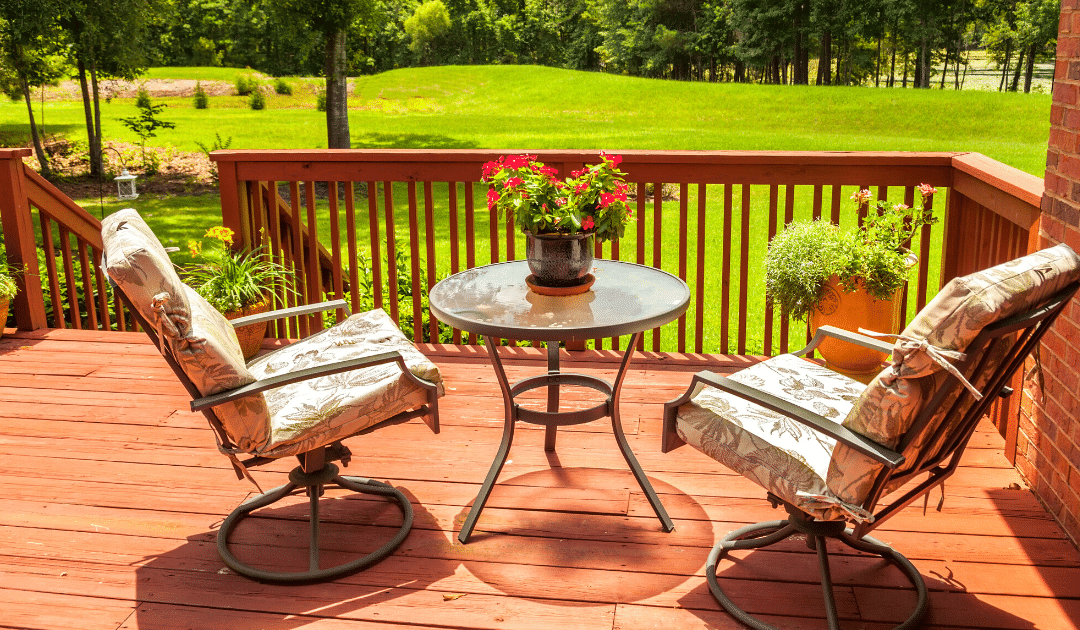
6. Patios & The Deck
If your deck is wood, check for rotted or loose boards or railings. Brick and stone patios should be checked for broken or loose pieces. Check concrete for chips and cracks; and metal for rust, corrosion, and sharp edges.
7. Weak Tree Branches
If you didn’t get a chance to trim your trees in the spring, make sure you do so asap! Look for broken or splintered branches – when they’re weak, they’re very hazardous. Also trim any dead or diseased limbs (the latter can spread disease throughout the tree), and any that were damaged by winter storms. Ditto for branches over power lines.
8. Pesticides
Don’t apply them when children or pets are nearby, and allow plenty of time for them to dry. Follow instructions and don’t apply more than the recommended amount. Avoid spraying on windy days. Wear long sleeves, pants, and eye protection when applying them, and be sure to wash your hands afterward. Store pesticides and any chemicals in a secure, locked area.
9. The Lawnmower
A 13-year study by the Journal of AAOS has highlighted the need for improved safety awareness of lawnmower dangers — especially in rural populations — as well as the significant number of injuries sustained by children. Teach your kids that lawnmowers are not toys (and don’t take them “on rides” on the mower). Besides collision risk, children are susceptible to burns from hot mower parts, and airborne debris kicked up by the mower. Keep kids out of the yard while mowing.
Taking the steps to get your backyard in summer shape will pay off in the form of good times, sweet memories, and a family safe from needless harm.
This article is furnished by California Casualty, providing auto and home insurance to educators, law enforcement officers, firefighters, and nurses. Get a quote at 1.866.704.8614 or www.calcas.com.
by California Casualty | Auto Insurance Info |
Our streets and freeways are coming back to life after having been empty for months. Now that we’re all getting back on the road, we’re getting re-acquainted with driving etiquette, traffic laws and sharing space with other drivers . . . which makes this a great time for a safe-driving refresh.
Here are 10 top driving errors and how you can easily correct them.
- Incorrect Speed
DON’T: drive too fast or too slow. Drivers often go faster than the posted speed limit (which is incredibly dangerous near schools and in residential areas) or drive too fast in extreme weather conditions or congested traffic. On the flip side, driving well below the speed limit can cause unsafe conditions for you or other drivers.
How to Correct: Make sure to abide by speed limits and also adjust speed according to your specific environmental conditions.
- Improper Lane Changes
DON’T: make unsafe lane changes. Changing lanes without double-checking for other vehicles can often lead to disastrous results. Blind spots, speed, and distraction all increase the risk of a collision.
How to Correct: Make it a habit to check mirrors, use turn signals, and do a full head check before changing lanes.
- Following Too Closely
DON’T: tailgate other cars. In the event of a stop or crash, there is not enough reaction time to avoid a crash.
How to Correct: Always stay several car lengths behind the traffic in front of you. A good rule of thumb is the 3-second rule. Using a fixed object as your guide, count the number of seconds (one-one thousand, two-one thousand…) between when the car in front of you passes it and you pass it. Add extra time in unsafe weather conditions or when roads are slick.
- Improper Turns
DON’T: avoid turning too wide. When you turn wide from the middle of the road, you risk colliding with pedestrians, bicyclists and other cars on the right.
How to Correct: To make a proper turn, use your turn signal about 100 feet before the turn and hug your car to the right as you slow your speed and complete the turn. This two-step process alerts other drivers around you and prevents others from moving in between your car and the curb.
- Passing Errors
DON’T: pass another vehicle within 100 ft of a railroad crossing or intersection, on a hill or curve, if you are in a “no passing” zone, or if there is oncoming traffic.
How to Correct: Passing another vehicle requires extreme caution, as you are briefly in the lane of oncoming traffic. To pass correctly, first make sure you have a long clear sightline of the other lane and that it’s free of oncoming traffic for a safe distance. Once you pass, don’t turn back into the right-hand lane until you can see the entire vehicle you just passed in your rearview mirror.
- Right-of-Way Violations
DON’T: assume you always have the right-of-way. Forty percent of all crashes involve intersections, so it’s prudent to use caution every time you approach and cross an intersection.
How to Correct: Make sure you fully stop at stop signs, obey the signals, and yield properly. Whenever there are other cars, be sure to scan the intersection — look left, straight ahead, right, and back to the left again. This gives you the time and visibility to pass safely through the intersection.
- Sudden Stops
DON’T: slam on your brakes, unless there is a valid reason.
How to Correct: Practice defensive driving and stay aware of your surroundings. Remember that any sudden movements will create a chain reaction behind you, and no one is anticipating your moves. To avoid any surprises, make sure to watch the road for pedestrians, animals crossing, or debris. In the event of an emergency, pull off to the shoulder and turn on your hazards.
- Riding the Brakes
DON’T: keep your foot on the brake while you are driving.
How to Correct: Keeping an overanxious foot on the brakes can create a “little boy who cried wolf effect” — making the driver behind you stop paying attention to your taillights and increasing the chance of a collision. Riding the brakes also wears them out much quicker. Save your breaks and ride smart.
- Not Using Your Turn Signals
DON’T: ignore your turn signals. Turn signals are an important safety feature that alerts other drivers of our intention to turn or change lanes. This gives them time to react safely, gives you the space you need to move and just generally be alert to a situational change.
How to Correct: Use your turn signals every time you are behind the wheel.
- Leaving the High Beams On
DON’T: drive with your high beams inappropriately. Incorrect use of high beams can be extremely dangerous. They can temporarily blind the drivers in front of you and those in oncoming traffic.
How to Correct: Limit the use of high beams to situations where you need them — on dark roads that have infrequent traffic, turn them off as soon as you see oncoming headlights, and remember never to use them in foggy or snowy conditions.
Soon enough, it’ll feel like we were never away from our cars and roadways. But while we’re here — getting back to our driving “normal” — it’s a perfect time to re-incorporate those safety basics back into our driving practice.
This article is furnished by California Casualty, providing auto and home insurance to educators, law enforcement officers, firefighters, and nurses. Get a quote at 1.866.704.8614 or www.calcas.com.