by California Casualty | Peace Officers |

The modern law enforcement station needs to be adequately prepared to deal with weapon security issues. Guns used by the station need to be properly stored to ensure that unauthorized individuals do not have access, yet they also need to be readily accessible when officers need them in a crisis situation. These four weapon storage solutions will help meet both of these needs. This article is part 1 of a three-part series highlighting storage options that the modern law enforcement agency needs to understand. You can read parts 2 and 3 here.
Gun Lockers
Law enforcement professionals often face situations where a trip to the weapons room to safely check in and store their gun in its required location is not possible. In instances like these, gun lockers can provide a well-organized temporary storage place to keep weapons safe. Having gun lockers mounted in interview rooms, common areas and other parts of the facility will allow handgun security to be accessed quickly and stored easily. With dedicated and master keys for each opening, gun lockers ensure that only those allowed are able to access the firearms. The availability of both floor- and wall-mounted gun lockers makes this a practical option for facilities of all shapes and sizes.
Gun Racks
Gun racks are an essential part of most stations. Weapon racks keep gun and ammo stored where it is readily accessible, yet secure when not in use. These units either lock tightly when the guns are not in use or use electronic locks connected to the RFID tracking system to keep guns securely in place to keep unauthorized personnel from having access to the weapons. They also allow for tracking of each piece, so your facility will always know who has which firearm.
For facilities that have many types of firearms, universal weapon racks are an ideal fit. These can be adjusted to accommodate firearms of varying sizes. They are also designed to allow weapons to be stored in ready-to-use condition, often with optics and accessories stored directly on the weapon.
Portable Weapon Storage Racks
What happens when a large number of weapons need to head to the field, such as in a tactical operation or a hostage situation? Does security take a back seat to the urgency of the problem? The answer should be “no.”
Portable weapons storage options are essential to a station that often needs to transport weapons to the field. With mobile storage units similar to the universal weapons rack, facilities can have a collection of weapons that they can take with them in the field while still maintaining the security that is required of a responsible station. These units are small, easy to maneuver and take up little space in the transport vehicle, but are carefully designed to hold a large number of firearms and ammunition.
Portable Gun Boxes
Many police departments require their officers to keep unused guns safely stored, even in transport. When just one handgun needs to head into the field and the officer does not need to wear it, a portable gun box is the ideal solution.
Locked and secure, these boxes make the handgun easy to transport without sacrificing the security of the situation. Designed to be lightweight and easy to carry, these boxes come in sizes to fit almost any handgun. Interior cushioning prevents jostling when the box is being moved so it is ready to use without damage when the gun and officer arrive at the location.
Author Bio: Denny Hammack is the President of Patterson Pope, a leading provider of storage solutions for the public safety industry since 1972.
by California Casualty | Peace Officers |
As someone from the general public, it was a true eye opener of an experience to learn what peace officers do on a daily basis. Sure, we read about stories of officers risking their lives, or watch stories on the news about those that make the ultimate sacrifice for everyday citizens, like me. This is mainly why I chose to do a ride along with Officer Joyner, with the Jefferson City Police Department.
It was a cloudy Saturday afternoon, and things seemed quiet in the station. Some officers were finishing typing reports and others on the phone with dispatch getting directions to the next call. Walking outside and getting into our patrol vehicle for the day was different for me, taking in the sight of all the patrol cars parked together.
We headed to the streets, my eyes wide open now, viewing things from a different perspective. I was being more observant than the usual drive in my car, when I’m usually focusing on everything else to be done that day. Officer Joyner was helpful in answering my questions as they came to mind, trying to figure anything and everything about what he and other officers think, feel, hear, and see while on the job. He told me about the city’s different patrol securities varying with the university in town, and the state capitol.
As the day went on, we had a few basic traffic stops for people who chose not to stop at a four way stop intersection, or to drive with expired tags. It was interesting observing what happens when the officer comes back to the vehicle after collecting your license and registration.
I asked Officer Joyner about how he got into the business of being a daily hero, protecting the city and those within it. He shared that he became interested in criminal justice in college and his passion for it has grown stronger over the years. I found the stories of Officer Joyner’s previous undercover narcotic experience fascinating as well as a brief history recap he gave of the state petitionary located in Jefferson City. Once we returned back at the station, we took a brief tour of the building. From the SWAT equipment and vehicles to the holding cells, it was a whole new world for me. I read about stories involving all of this daily, and now it puts everything in perspective.
I wish everyone could have the experience that I did. Peace officers have one of the most dangerous and risky jobs, not knowing what the next day or hour could bring to them, unlike some of us who just report from a desk. I could not have thanked Officer Joyner and the other officers enough for an amazing experience, along with extending my sincere gratitude for all the other peace officers out there.
by California Casualty | Peace Officers |
With the polar vortex still roaring across the country, everyone is frantically doing their part to keep warm and safe. Abbye spent over a year writing about heroes for California Casualty, and recently had the opportunity to experience how some peace officers are willing to go above the call firsthand. This is the story in her words:
On the evening of January 6, the windchill in Ann Arbor, Michigan was around negative 35 degrees. The roads were frozen and icy as I got on Highway 94 headed to the airport. It was around 11 PM and pitch black out. Not 20 minutes into my drive, I hit a patch of black ice and crashed my truck head-on into a highway median. I quickly called 911 and about five minutes later, a Michigan State Trooper named Anthony Young arrived on the scene. Given the horrible road conditions, the inclement weather, and the exceptionally cold temperatures, I’m sure Trooper Young had a long night before he was dispatched to the scene of my accident. But you’d never guess from his demeanor. Upon arrival, he made sure I was okay and even asked about my dog- who had been in the car with me. I have never been in that serious of an accident and I was pretty shaken up and scared. Young was patient, calm and reassuring. I had hit a median and was stuck on the left side of the highway, but Young kept his lights on behind me to alert other motorists and keep me safe from another collision.
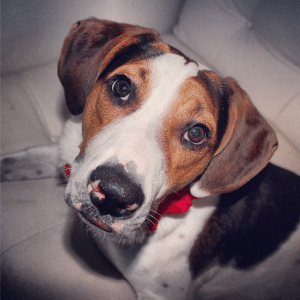
Shortly after a tow truck arrived on the scene, the driver inadvertently let my very frightened dog out of the car. My dog, Seamus, immediately took off, sprinting along the center median down the highway. I took off after him. Acting quickly, Trooper Young immediately followed alongside Seamus with his lights on, preventing him from crossing traffic and getting hit by oncoming traffic. Young even tried to cut off Seamus’ run by blocking him between the median and his vehicle, but Seamus hopped over the hood of his car, crossed west-bound traffic and ran off into the woods.
Trooper Young had already written his accident report and I’m sure he could’ve left the scene, or even told me I had to abandon my search for my own safety and his. Instead, Young got out his flashlight and started to help me look for my lost dog. His partner arrived on the scene, and the two troopers, the tow truck driver and I all walked the edge of the woods, calling for Seamus. Admittedly, I was a bit hysterical. I had just totaled my car and now I had lost my dog. Young remained completely calm and never once suggested we abandon the search.
It was Trooper Young who eventually located the spot where Seamus had entered the woods. He then used his flashlight to light the way as I followed Seamus’ trail. The windchill on Monday was around -35 degrees and there was at least two feet of snow on the ground, but Young didn’t give up. He stayed right behind me, trumping through the snow, until we found my freezing, terrified dog. By then, we were miles from the original crash site. When we found Shae, Young just laughed, patting him on the head and commenting on how much he must like a good evening run. I thanked him repeatedly for saving my dog, to which he humbly laughed and said I was lucky to have found the troopers (him and his partner) who were dog lovers.
Lucky is an understatement. I know it may seem like a little thing, helping some hysterical woman find her lost dog, but if you happen to be a dog owner, I’m sure you can appreciate what it would be like to total your car and then lose your dog. I had recently changed Seamus’ collar and knew his new one was without ID. It was dangerously cold and he had just been in a serious car accident, so I was sure he would be in serious trouble if we didn’t find him that night. I just recently moved to Michigan for school and Seamus is the only ‘family’ I have here. Losing him would have been devastating.
by California Casualty | Nominate a Hero, Peace Officers |
Voting is now closed. Click here to view the winner announcement and read all the hero’s stories!
We see a lot of nominations from firefighters and peace officers – but this is the first nomination we’ve ever had that was a peace officer acting like a firefighter!
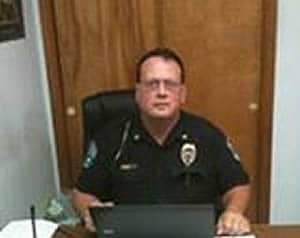
Tony was nominated because of his heroism during a structure fire in 2012. He responded to an apartment building where the second floor was fully engulfed in flames. When he arrived, an occupant of the building told him that an elderly woman and her son were still trapped on the second floor.
The staircase leading to the apartment was thick with flames and smoke, and visibility was nearly zero. As he reached the second floor, Tony entered two apartments and found them vacant. When his knocks on the third apartment door went unanswered, he kicked it in to discover two people still sleeping. He guided the male occupant to safety, then immediately re-entered the blaze to carry the elderly woman to waiting paramedics.
Tony suffered from smoke inhalation, briefly treated, and then released from the hospital. Because of his heroism, the occupants were unhurt.
by California Casualty | Nominate a Hero, Peace Officers |
Voting is now closed! Click here to view the winner announcement!
Be sure to read all our hero’s stories here.
Roger has been a deputy sheriff for the past 5 years. He was destined for public service, starting his career as a volunteer firefighter at 18, then as a volunteer deputy while having a full-time job. Roger is also very involved with the Red Cross. He received certification from the OSU fire service while still in high school.
Roger dedicated many years to the Brushy Mountain Fire Dept. During a wildfire, with a year-long drought working against him, Roger drove the only running water truck to nearby houses, until neighboring departments could help. His efforts saved 5 families’ homes.
In 2004, Roger joined with American Red Cross to help Hurricane Katrina evacuees from New Orleans relocating to Oklahoma. Locally, Roger was the Disaster Action Team Leader, responding to fires within the four counties he was in charge of. Roger’s family tells us that he takes time out of his schedule to volunteer as a senior counselor at Oklahoma boy’s state and has been since 2004. As counselor in charge of Police academy, he shows teenagers the aspects of the duties of police officers.. Roger also works with local business for sponsorships for students to participate each year.
In 2008, Roger joined the Muskogee County Sheriff’s Office as a Reserve officer. Colleagues of Roger say they can always count on him, no matter what time, day or night. Roger speaks and visits local schools to talk and interact with children about Law Enforcement.
by California Casualty | Peace Officers |
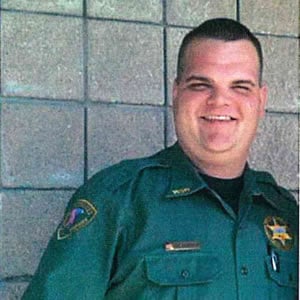
The Black Forest Fire was the most destructive fire in Colorado history.
500 homes, 2 lives, and countless possessions were lost in the blaze. A lot of those possessions can be replaced, but some have value that goes much deeper.
In 2006, Officer Jared Jensen with the Colorado Springs Police Department was killed in the line of duty. After his murder, Officer Jensen’s brother and nephew attended the Law Enforcement Memorial in DC where they met officers from across the country. At the event, Officer Jensen’s nephew received patches from the officers he met and decided to start collecting as many patches as he could. His collection was burned in the Black Forest Fire last week.
Let’s replace the collection with an even bigger one.
You can help by sending department patches to:
Adam Romine
Colorado Springs Police Dept.
415 E. Pikes Peak Ave, Suite 200
Colorado Springs, CO 80903.
More information can be found here and here!