by California Casualty | Nurses |
So, you want to be an Emergency Room nurse – that’s where all the action is, right?
That may be true but Kyleigh Roessner RN-BSN has this list of the 5 Craziest (and True) Things you might encounter in the ER:
1. Foreign bodies (things found inserted in the human body)
2. Tragic examples of homelessness and destitution
3. The “ick” factor
4. Complex mental conditions and disorders
5. Chronic repeats

We will leave the descriptions of the above for you to read here.
What is the craziest thing you have seen in the ER?
We would love to hear about it. Share with us below!
Read Kyleigh’s article here,
by California Casualty | Nurses |
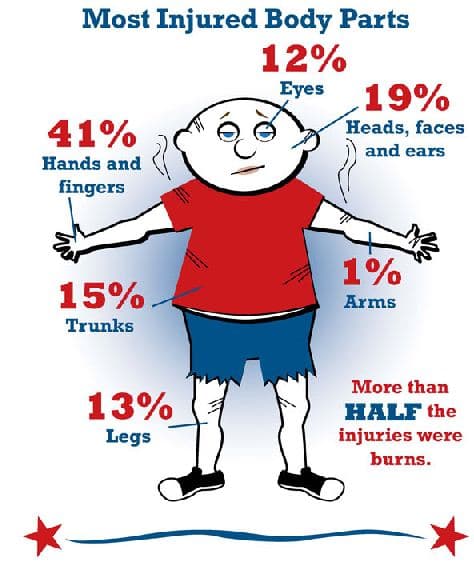
Lighting a fuse or sparkler is like holding a ticking time bomb; odds are someone, most likely a child, is going to be hurt. Every year nurses are called upon to try and heal the wounded from fireworks injuries.
Now there is a concerted effort to prevent the tragedy before it occurs. The Emergency Nurses Association (ENA) has joined the National Association of Pediatric Nurse Practitioners, the National Association of School Nurses and other health organizations in an alliance with the National Fire Protection Association calling for an end to the use of personal fireworks. The goal, educate parents and caretakers before there are more injuries.
Here is why: the numbers are staggering, in 2011 fireworks caused an estimated 17,800 fires resulting in eight deaths, 40 injuries and $32 million in direct property damage. 2013 injury figures show U.S. hospital emergency rooms treated an estimated 11,400 people for fireworks related injuries. Children under the age of five experienced a higher estimated per capita injury rate than any other age group.
How many times have you, as a nurse, had to cradle a badly burnt six year old or counseled a parent about their youngster’s loss of a finger?
The U.S. Consumer Product Safety Commission warns that even sparklers burn at nearly 2,000 degrees, hot enough to melt, wood, plastics and some metals and inflict terrible burns on mostly young people. Sixty percent of injuries and deaths from fireworks occur in the weeks just before and after the 4th of July. Most injuries are to the hands and fingers, head and face and the eyes caused mainly from firecrackers, bottle rockets and sparklers. The Emergency Nurses Association asserts the damage from fireworks can cause permanent scaring, both physically and mentally to children. “The extremities are essential for mobility; head injury is particularly critical: and burns can cause both pain and deformity. The message is very straightforward: fireworks are not safe to handle, watch them from a distance,” said the president of the ENA.
The National Fire Protection Association is so troubled by the carnage and damage from fireworks that they have created the Alliance to Stop Consumer Fireworks. They urge everyone to attend professional fireworks and never buy or use fireworks at home.
Realizing fireworks are still used by families; the Consumer Product Safety Commission has developed these essential safety tips:
- Never allow young children to play with or ignite fireworks.
- Avoid buying fireworks that are packaged in brown paper because this is often a sign that the fireworks were made for professional displays and that they could pose a danger to consumers.
- Always have an adult supervise fireworks activities. Parents don’t realize that young children suffer injuries from sparklers. Sparklers burn at temperatures of about 2,000 degrees – hot enough to melt some metals.
- Never place any part of your body directly over a fireworks device when lighting the fuse. Back up to a safe distance immediately after lighting fireworks.
- Never try to re-light or pick up fireworks that have not ignited fully.
- Never point or throw fireworks at another person.
- Keep a bucket of water or a garden hose handy in case of fire or other mishap.
- Light fireworks one at a time, then move back quickly.
- Never carry fireworks in a pocket or shoot them off in metal or glass containers.
- After fireworks complete their burning, douse the spent device with plenty of water from a bucket or hose before discarding it to prevent a trash fire.
- Make sure fireworks are legal in your area before buying or using them.
Remember, while they may be pretty to watch, the damage from personal use of fireworks is more than just statistics or numbers on a page; they are real people – sons, daughters parents and grandparents – real flesh-and-blood victims. Think of them and the nurse who is waiting in the emergency room.
Sources :
travelnursing.com
nfpa.org
cpsc.gov
nfpa.org/safety
by California Casualty | Nurses |

Source: TheNursingBible.com
by California Casualty | Nurses |

We’ve condensed the top five from the list at Nursinglink at Monster.com:
- Have you ever done this before?
- My last doctor fired me.
- Don’t touch me or I’ll scream.
- I’m allergic to everything.
- Okay, but you have to take everything off too.
Again, see the entire list of crazy things nurses hear from patients at the article in Nursinglink at Monster.com.
by California Casualty | Nurses |
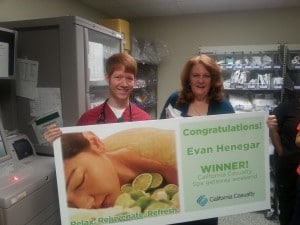
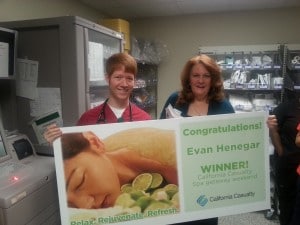
Two-and-a-half years of working three, 12-hour shifts in one of Alabama’s busiest hospitals can take its toll. Now Evan Henegar, an RN at the University of Alabama Birmingham (UAB) Hospital is planning a trip to ease that stress. Evan was randomly picked as the grand prize winner of California Casualty’s “Give A Nurse A Break” contest, from more than 11,000 entrants across the nation. Evan, his wife and two co-workers will soon be embarking on a scrumptious getaway to the world-famous Chocolate Spa® at The Hotel Hershey® in Hershey, PA. The all-expenses paid trip for four has a value of $5,500.
Henegar graduated from the University of Alabama Birmingham with a nursing degree. He is now a general medicine nurse. “We get every patient you can imagine, from a broken leg, surgery or cardio. We do total patient care from baths, dispensing medicine to assessments,” he said. Henegar says it’s all great training and experience for his next assignment, Emergency and Trauma. UAB is the only recognized level I trauma center for the State of Alabama.
Henegar got turned onto California Casualty’s “Give A Nurse A Break” contest by a co-worker who told him to check it out on Facebook. “I can’t believe my luck; I am just so appreciative and grateful.”
“Often times, nurses aren’t always appreciated for the incredibly hard work they do,” said California Casualty Vice President, Mike McCormick. “This is just one way we can say ‘Thank you and we appreciate you.’”
Previous winner, Lisa Gordon, LPN, from Victoria Texas experienced her spa getaway in October. “I love what I do….and I am so excited and amazed that I won this trip from California Casualty just for being a nurse!” she exclaimed as she and two of her closest friends luxuriated at The Hotel Hershey® and Spa. Gordon is currently continuing her education to obtain her RN.
You could win the next “Give A Nurse A Break” grand prize getaway. Click for more information on full contest rules and how to enter.
by California Casualty | Nominate a Hero, Nurses |
Voting is now closed. Click here to view the winner announcement and read all the hero’s stories!
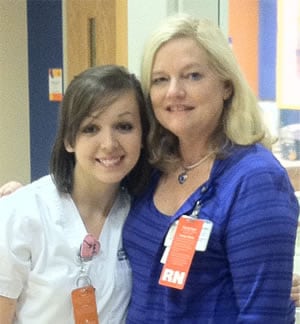
To her patients, Kathy is considered family for the care and love she gives. Kathy had such a large impact on those in her care, one of her patients wrote to us. This patient, at a young age, went through a bone marrow transplant and chemotherapy. She says Kathy was the best nurse, going above and beyond to give her superior care.
As this young patient struggled with seeing others in similar situations pass away, Kathy was there to keep her spirits up – offering encouragement and a shoulder to cry on. Once she was healthy again, Kathy helped her restart her college dreams, even helping to locate scholarships. To this day, Kathy calls and emails her patient to make sure she is doing well.
Kathy goes above and beyond, making a personal connection with her patients and following through after treatment ends. She is an inspiration for her fellow nurses, and our nominee for hero of the month!