by California Casualty | Nominate a Hero |
You have probably seen them; people around you who are super confident, loved by all and ready to rescue others when they need help with a task. They don’t wear a cape or mask, but they are revered by others.
How can you be like them?
It doesn’t take super powers like the ability to leap tall buildings in a single bound or shoot laser beams from your hands or eyes to be a hero. Often times, all you need to do is conquer self-doubt and limitations; vanquishing the inner-villain thwarting the hero trapped inside of you.
Here are some easy steps to block self-doubt and other self-limiting obstacles:
- Be Brave – identify your fears and shine a light on them. We all have inner villains within us, but as superhero you can overcome the fears, and see the powers you have always had.
- Have Integrity – Stand up for what is right when no else does. The reward will be worth it.
- Save a Life – Reach out to others in need and serve, teach and guide them. Don’t forget to also rescue yourself. Defeating anxiety and stress can allow us to fly to happiness.
- Defeat Archrivals – Procrastination, laziness, self-defeat, and ignorance can all be villains to us. But we can to rise to the occasion and destroy them.
- Offer Hope – Be the person who is strong enough to offer hope in the face of overwhelming doubt or defeat. Let your optimism and decency brighten the path for others.
Simply employing your strengths and intuition can free up your mind, allowing you to become a superhero.
Remember, most superheroes have questioned themselves and their mission. By overcoming their doubts they were able to rise up and be a beacon to others while rescuing themselves in the process. They become everyday heroes to those around them.
At California Casualty, we recognize those who make a difference for their communities. That’s why we created the Nominate a Hero program, www.nominatemyhero.com. We want to honor educators, law enforcement officers, firefighters, EMTs and health professionals who have gone above and beyond for others with a monthly $250 prize and the chance to be enshrined on the Hall of Heroes. Nominate your hero today!
by California Casualty | Homeowners Insurance Info |
While they can be lovable, cuddly and loyal, if you have a dog, be careful; dog bites accounted for more than one-third of all homeowners insurance liability claim dollars paid out in 2015, costing more than $530 million according to the Insurance Information Institute (III).
The Centers for Disease Control and Prevention reports that about 4.5 million people are bitten by dogs each year with 885,000 of those requiring medical attention – about half of those were children.
The III reported that while the number of dog bite claims nationwide fell seven percent in 2015, the average cost per claim jumped 16 percent to over $37,000. California led the nation with 1,684 dog bites reported to insurance companies. .
“The average cost per claim nationally has risen more than 94 percent in the last decade (2003-2015), due to increased medical costs as well as the size of settlements, judgments and jury awards given to plaintiffs, which are still on the upswing,” said Loretta Worters, vice president with the III.
May 15-22 is National Dog Bite Prevention Week®, providing information and tips to help pet owners and the public avoid the serious health issue associated with dog bites.
Experts say that even normally docile dogs may bite when they are frightened or when defending their puppies, owners or food. The most dangerous dogs are those that suffer from poor training, irresponsible owners and breeding practices that foster viciousness. The CDC finds that over half of the dog-bite injuries occur at home and people who have two or more dogs in the household are five times more likely to be bitten than those living without canines.
The Humane Society of the United States and the American Veterinary Medical Association offer these bite prevention tips:
- Be a responsible dog owner – license it and provide regular veterinary care including vaccinations
- Neuter your pet
- Spend time with your dog and socialize it around people and other pets
- Keep your dog away from stressful situations like crowds
- Don’t let children approach an unfamiliar dog
- Discourage children
- Never leave a baby or small child alone with a dog
- Refrain from approaching a dog at eye level or too quickly
- Don’t interact with an unfamiliar dog and remain motionless if approached by one
- Immediately seek professional advice from veterinarians or animal behaviorists if your dog develops aggressive or undesirable behaviors
Homeowners and renters need to know the liabilities that come with dogs.
If you have a dog, you are liable if it bites and injures someone. The Insurance Information Institute recommends pet owners have at least $100,000 to $300,000 liability coverage with their homeowners or renters policy. High income earners or those with expensive homes and assets might consider an umbrella policy.
In some states, statutes make the owners liable whether or not they knew the dog had a tendency to bite; in others, owners can be held responsible only if they knew or should have known their dogs had a propensity to bite. Some states and municipalities have “breed specific” statutes that identify breeds such as pit bulls as dangerous; in others individual dogs can be designated as vicious.
In Ohio, for example, owners of dogs that have been classified as vicious are required to purchase at least $100,000 of liability insurance. Once a dog has bitten someone, it poses an increased risk. In that instance, the insurance company may charge a higher premium, non-renew the homeowner’s insurance policy or exclude the dog from coverage.
by California Casualty | Safety |
High school prom and graduation season is a time for joy and preparing for the future. They are both important rites of passage for our children, but they can also be a dangerous time with many temptations.
While teens are worrying about getting the perfect dress or tux, flowers and hair style, parents are worrying about the safety of their children. These can remain joyous events if parents and children discuss responsible behavior and the repercussions of bad choices.
Communication is the key. Talk with your student about what it was like when you attended prom and graduation, and express your desire for them to have a fun and memorable time too. During your discussion lay out some ground rules about what you expect from your child including:
- That they stay in contact with you and provide updates
- They let you know who is driving
- They inform you where they are going after the event
- The agreed time they will be home
And most importantly, talk about the dangers of:
- Distractions and distracted behavior (texting, eating or taking eyes off the road while driving to interact with passengers)
- Driving under the influence of drugs or alcohol
- Not observing speed limits and other road rules
- Getting into a vehicle with an impaired or aggressive driver
- Not wearing seatbelts
Don’t be afraid to offer your child the option of calling you, with no repercussions, for help or advice if they feel unsafe. Letting your child know they can get a safe ride home, no matter what the circumstances, can save their life.
Safe driving isn’t an accident; it’s the result of strong parental involvement and setting expectations. That’s why California Casualty is a founding member and continued supporter of Impact Teen Drivers, a nonprofit that educates parents and teens about the dangers of distracted and reckless driving. Their presentations and peer-to-peer messaging saves lives.
by California Casualty | Nominate a Hero |
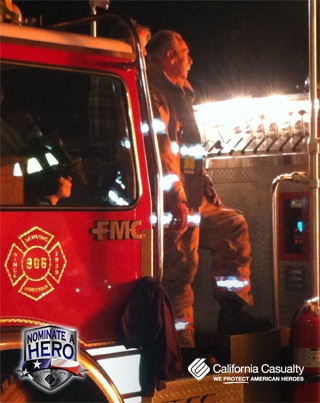
It was mid-December when Bishopville, MD Volunteer Fire was alerted to a structure fire with someone trapped inside. Mace, a 43 year veteran, was the first on the scene. The two-story house had fire shooting through the roof on the second floor. He quickly located the victim about 4-5 feet inside the doorway. With help from the local county Sheriff, both were able to pull the victim out safely. His quick actions and bravery in the face of danger have earned Mace our Hero of the Month designation!
by California Casualty | Auto Insurance Info |
We wouldn’t allow our children to play with an unsafe toy, nor would we use a household item that was deemed dangerous. But, when it comes to our autos and trucks, many Americans continue driving one that has been recalled because of a safety concern.
It’s More Than You Might Think
The statistics are a bit unsettling – the number of recalled vehicles reached 51 million in 2015, second only to 2014’s record of 60 million vehicles.
What do you need to be worried about?
Auto experts say the bulk of the recalls are for faulty airbags, which have been linked to injuries and deaths. However, other recalls were for hazards involving steering, cruise control, engines and seat belts. These failures have led to sudden loss of control of the vehicle, parts failures in a crash, or caused vehicle fires.
Many Are Not Getting Fixed
Despite a major effort by automakers, only 75 percent of vehicles that might have issues are being looked at or repaired.
And that’s the concern; a recent Carfax survey found that tens of millions of vehicles that have been recalled the past few years have never been fixed. By their estimate, one in five on the roads today is in need of a repair for a safety defect. Even more troubling is that the type of vehicle with the highest rate of unfixed safety issues is a family-owned minivan. SUVs and pickup trucks are a close second and third. Often, this means the drivers of those cars or trucks, maybe someone you know, is at significant risk if a part should fail.
So Why Wouldn’t Someone Get the Fix?
There are many reasons why drivers aren’t getting defective vehicles to a dealer or mechanic:
- They are not aware of the recall
- They worry it will take too much time or cost too much
- They just don’t care
- Recall notices are often mailed to an old address
- So Has Your Vehicle Been Recalled?
The government maintains an excellent website where you can check, for free:
https://www.safercar.gov/CheckForRecalls
If you find your vehicle on the recall list, safety groups recommend that you contact the car dealer immediately to set up an appointment to have it looked at. Keep in mind, you should not have to pay for any parts or labor because of a recall. Not all vehicles may need a fix, but finding out will bring you peace-of-mind. And, if you think your vehicle has a defect, but hasn’t been recalled yet, save any receipts; you should be reimbursed if the recall occurs later.
What Does a Recall Mean for My Insurance?
While driving a recalled vehicle shouldn’t affect your insurance, the quicker you have it checked out or repaired, the safer you and others will be.
However, you should contact your insurance company if the dealer gives you a loaner car while yours is being repaired; you’ll want to verify that you have the right coverage..