by California Casualty | Auto Insurance Info |
If you’ve gotten a new recall notice about a dangerous airbag, you are not alone. The National Highway Traffic Safety Administration (NHTSA) is warning that 51 million vehicles had some recall in 2015. That follows the record 60 million the year before.
Most of these recalls involve Takata equipped airbags. As of April 2016, ten deaths in the U.S. have been attributed to the defective airbag inflator that can send dangerous shards of metal at drivers and passengers. Of the 24 million U.S. vehicles recalled for the problem, only 7 million have had the inflators replaced. Many auto makers, including Honda, are redoubling their efforts to notify consumers about the recall, dating back to 2013.
Be prepared that when you take your car or truck in to fix the problem, it could take weeks or even months until the parts arrive. Many automotive dealers are offering temporary rentals or loaner vehicles until the work is complete. If you get that offer, here are some insurance issues you need to know.
- Your personal auto insurance policy should transfer to that temporary vehicle, but with the same deductibles and limits contained in that policy. If you have an older car or truck without coverage for damage from a collision or hail, flood, etc. (comprehensive and collision), the temporary car you are using does not have that coverage either. Unless you add that it, you will be paying out of pocket to replace or fix the loaner if you cause a crash. You might also want to make sure you have uninsured/under-insured motorist coverage.
- Most insurance companies don’t pay for “loss of use” for a rental vehicle. If you damage the car or are involved in an accident, you can be charged for the time it takes to repair and have it available for rent again. Rental companies will usually charge you the daily rate they lost while that car or truck is getting repaired, plus administrative fees. That’s why you want to negotiate with the dealer for loss of use coverage; otherwise, you may want to purchase it through the agency providing the vehicle.
- You should not drive your recalled vehicle while you have a “loaner” vehicle. Doing so could void the need for that temporary vehicle, and crash with either vehicle may not be covered.
- To speed up any claims and avoid miscommunication, contact your insurance company to let them know you are using a temporary vehicle and provide the year, make, model and vehicle identification number.
You can find additional information, including how to check if your car has been recalled by clicking here.
by California Casualty | Educators |
They work long hours supporting and educating our children. How often have you taken the time to say thank you? Here are 25 simple ways to say thanks:
- Give a sincere thank you in person
- Slip a thank you card on their desk
- Write a special note in your child’s homework folder
- Send a kind email to thank them for something specific they did for your child
- Have your child write a note or draw a picture for them
- Stop in for a brief moment before or after school to say thanks
- Tell the principal and other administrators how much you appreciate your child’s teacher
- Send in supplies for the classroom
- Volunteer in the classroom
- Chaperone a field trip
- Volunteer to help with something at home (cutting out lamination, organizing files, etc.)
- Offer to come in and help make copies or work on a special project
- Give a gift card for Teacher Appreciation Week
- Donate an iTunes gift cards so the class can download new apps
- Buy a book to donate to the class library
- Bring in homemade treats
- Deliver a cookie, or other tasty treat from a local bakery
- Find out what their favorite snack is and bring it to them
- Recognize them with some takeout for lunch
- Make a bouquet of pencils or highlighters or other school supplies
- Compliment them on Facebook
- Bring in their favorite soft drink or tea
- Give them flowers
- Buy a gift certificate they can use at a bookstore
- Help with stress; bring a relaxing gift – bath salts, soothing lotions or gift certificate for a pedicure
Here’s another way to show appreciation for a teacher that made a difference in you or your child’s life; join the National Teachers Hall of Fame’s (NTHF) “One In A Million – Teachers Who Make A Difference” campaign. Anyone in the U.S. can place a teacher’s name into the Hall of Fame archives with a $1 donation. Donations of $125 will also get the teacher’s name placed on a brick of the NTHF donor’s wall of fame. Learn more about honoring a teacher at https://www.nthf.org/honor-an-educator.
California Casualty appreciates educators. Our relationship spans 65 years. We thank them with numerous giving programs that make a real difference:
California Casualty auto and home insurance is also specifically tailored for educator’s lifestyle with exclusive benefits not available to the general public:
- $500 personal property coverage for items stolen, damaged or destroyed in your vehicle
- Reduced or zero deductible for vandalism or damage to your vehicle when it is parked at work
- Rates guaranteed for a full year (not six months)
- Free identity theft protection with each policy
- Multiple payment options including EZ Pay and holiday or summer skips
- Superior customer service – 99 percent with a claims satisfaction rating of 96 percent, https://www.calcas.com/customer-feedback
Resources for this article:
https://whattheteacherwants.blogspot.com/2014/11/25-ways-to-thank-teacher.html
https://teaching.about.com/od/ParentalInvolvement/fl/Twenty-Five-Ways-to-Say-Thank-You-to-Teachers.htm
by California Casualty | Peace Officers |
As a part of law enforcement, you face difficult situations daily. Stress is everywhere and everyone struggles with it. How it can manifest can depend on the individual’s stress management techniques and lifestyle. Research shows that police officers who don’t manage stress properly are prone to burnout, poor judgment, substance abuse, and suicide. With all of this, it isn’t often that you find an officer that isn’t stressed out.
Here are some of the sources of stress officers encounter:
- Exposure to Distress: the distress of public that you become involved with will at some point affect you. This can take a toll on stress and mental health.
- Danger: Many officers experience physical danger daily, especially departments in areas with high crime rates. The possibility of being injured can become heavy mentally.
- Responsibility: The responsibility of protecting lives is a great deal of stress in itself.
- The Pace: Officers must always be ready for all situations at a moment’s notice. Switching from office work to crime work doesn’t allow for much rest causing your mind to rush back and forth.
With all the different stressors, we have tips to help manage your stress.
- Breathe: Practicing deep breaths can create a sense of calm.
- Breakfast: Eating oatmeal is said to help reduce stress. Start your day on the right foot with a beneficial breakfast.
- Exercise: It releases endorphins that eliminate tense muscles and stress.
- Sleep: Schedules can be hectic, but make sure to get enough hours of sleep. Feeling well rested the next day will help with alertness while on duty.
- Have a strong network of family and friends: Close relationships will help provide a strong support system and help with your stressors.
If you feel like the stress of the job is becoming more overwhelming, recognize that there are outlets for help. Reach out to your support system, friends and/or family. Having a life outside of the job will also help with physical and mental health. There are other options for outlets. Seek peer counseling or employee assistance programs, which are in place to assist officers in times of high stress.
by California Casualty | Safety |

Most of us spend at least 5 days a week driving to work on a regular basis. So if you commute an hour a day, that is 5 hours a week, 20 hours a month, and 240 hours a year driving. And that’s just driving to work, not including errands run to/from work or on days off.
With that much time in the car, it’s crucial to have good posture while driving. If any of these signs look familiar, it is time to make adjustments.
Bad Posture includes:
- Poked Neck
- Shoulders Hunched Forward
- Upper Back Rounded forward
- Pelvis slouched
If you said yes to having any of the above, odds are it came from sitting in front of the computer. These symptoms can lead to bigger issues like constant headaches, back pain, and more. Safety is a top priority, so if any of these next exercises cause more pain, please refrain from doing them.
Seat Adjustment: Keep your seat height high (as it can comfortably go). Make sure you can see complete vision of the road, and your feet can comfortably reach the pedals. If the seat is too low, it will cause slouching and result in rounded posture which is what we want to avoid.
Lumbar Support: See that the back of your seat fits comfortably with the natural arch of your lower back. If your car does not have this feature, use a rolled towel or small pillow instead. If the lumbar support is not correct, this can leave you with the tendency to round your back.
Elbow Position: Keep your elbows low and close to your body, in a comfortable position. Don’t flare them out. This keeps your shoulders safe and in a neutral place. Don’t place your elbows on the side of the window, this makes the elbows flare-ending in bad posture.
Change your Driving Position: Develop a range of different positions for driving. Sitting in the same position can cause discomfort.
As said before, safety is a main concern. Many long–term injuries can be prevented by protecting yourself and maintaining good health.
by California Casualty | Educators |
Going green is not just a slogan for some Washington State schools. They are doing their part to teach our children life-long lessons about sustainability and stewardship of the environment.
“Kids are very creative and once we get them involved, they carry the concept even further than we imagined,” said Laurie James, coordinator of the Green Ribbon Schools project at Discovery Elementary School in Everett, Washington. Discovery Elementary is a 2015 National Green Ribbon Schools honoree.
The U.S. Department of Education urges schools and school districts across the nation to build sustainable programs using three key pillars:
- Reduce environmental impacts and costs
- Improve the health and wellness of schools, students and staff
- Provide environmental education, which teaches many disciplines, especially in incorporating STEM, civic skills and green career pathways
Answering the challenge has resulted in schools that have reduced operating costs, which enabled administrators to dedicate more resources to instruction. It also promotes more student engagement and staff pride and productivity.
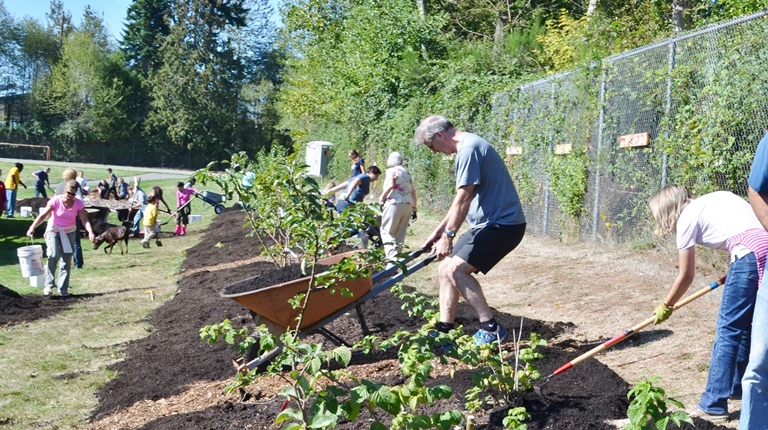
Discovery Elementary now has recycling and composting bins around the campus, a community garden and new fruit trees that produce a crop every year. The environmental message has been integrated into the curriculum, including health, science and math classes. Students create and build solar projects, set up bee hives, measure how much mulch and other organic material the garden will need, and learn about fresh foods and nutrition.
For Laurie James, it was more than just tackling a set of stated goals. “This has brought children from a variety of backgrounds together, building life-long lessons about sustainability and stewardship of the environment. The end result is not only children who have a new appreciation for how they can impact the future, but it also encourages family and community involvement.”
Another 2015 Washington Green Ribbon designee is Hillcrest Elementary School in Oak Harbor. Just like Discovery, the efforts at Hillcrest Elementary are student driven. There is a heavy emphasis on the garden; incorporating science, math and other curriculum. Students measure and design the best configuration for planting the gardens, and weigh, graph and calculate how much peat moss is needed to balance food scraps used in the compost bins. They also use real life marketing and accounting principles as they sell eggs from the chickens now raised at the school. Proceeds are donated to the local food bank.
Principal Paula Seaman said that being a Green Ribbon school has been a source of pride for the students and staff. “Other schools in our district are constantly visiting and working to set up a garden like ours,” she said. “We have been awarded more grants because of our designation…including $2,000 to enhance our garden. The award has united our community and students. They are committed to making Earth a better, safer and greener planet and know their contributions make a difference.”
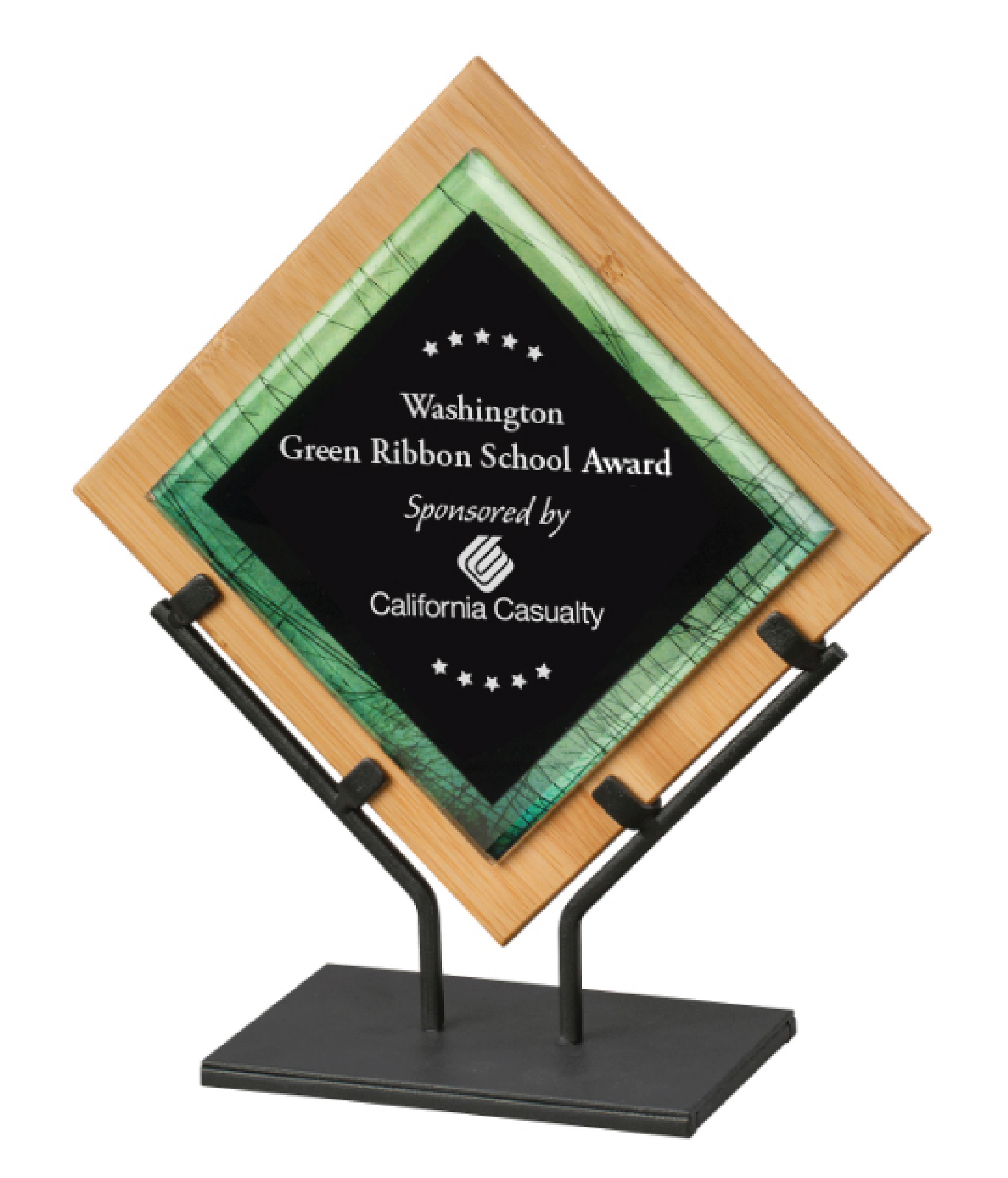
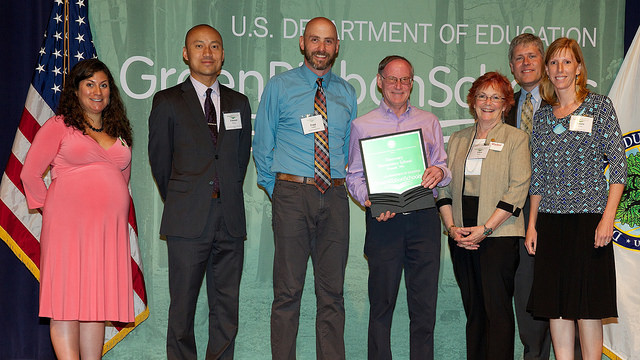
While achieving Green Ribbon School status is a great honor, there is a missing piece to the process. Each year, schools and districts that meet the stringent criteria are honored in Washington, D.C., but can only attend if they have the funds to make the trip. For many Washington State honorees, that can be a challenge.
Attending a program honoring the hard work of students, staff and the community shouldn’t be a burden. Seeing the need, California Casualty stepped in as the 2016 local sponsor of the Washington Green Ribbon Schools program, providing some travel and lodging expenses. As a long-time partner with the NEA Member Benefits in Washington, California Casualty is committed and honored to serve educators.
“Having this financial support takes the sting out of the cost of being recognized,” said James. “It will relieve the stress of fundraising and is one less hurdle to overcome in this important process.”
California Casualty congratulates the 2016 Green Ribbon award winners announced this Earth Day: Bethel and Issaquah School Districts, Columbia Crest A-STEM Academy (Ashford), Gaiser Middle School (Vancouver) and Lakota Middle School (Federal Way). We are proud to help support a program that benefits the environment and future generations of students while highlighting the best in Washington State schools.