
You’ve spent countless hours on the front lines, making split-second decisions and keeping people safe when it matters most. But have you ever wondered how far your skills could take you outside the ambulance? From fast-paced field roles to specialized safety consulting and beyond, EMT training can open doors to surprising careers you might never have considered — ones that put your experience to work in new, exciting ways.
If you’re feeling burned out, curious about growth opportunities, or simply ready for something different, here are some career paths where your EMT training already gives you a strong head start.
Amusement Park Medical Staff
Major amusement parks employ onsite medical teams to handle everything from heat exhaustion and minor injuries to stabilizing patients before transport. EMTs may also assist with safety reviews of rides and facilities. It’s clinical work in a unique, high-traffic environment.
CPR Instructor
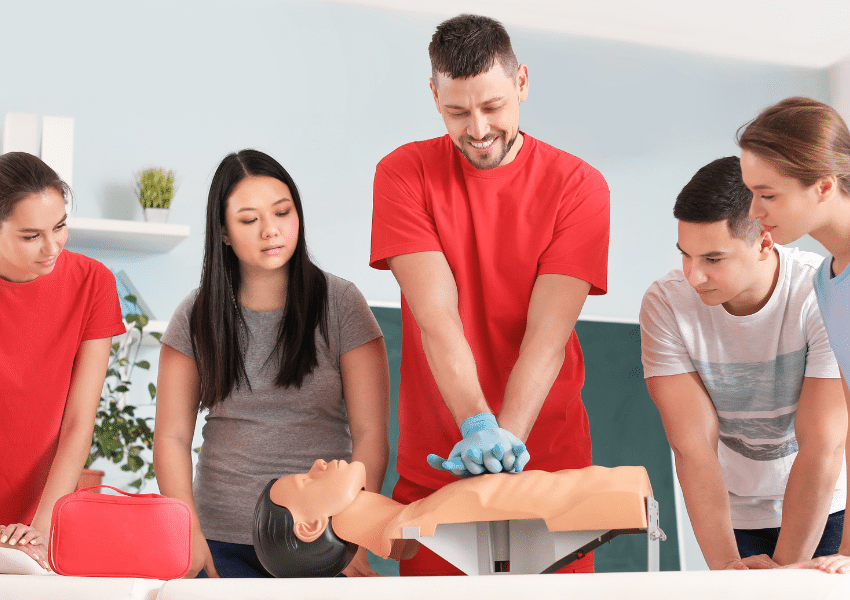
Teaching CPR and AED use lets you turn your field knowledge into life-saving education. Instructors prepare lesson plans, demonstrate techniques, and evaluate students. You can work through hospitals, private training firms, or organizations like the American Red Cross — or run your own training business.
Emergency Dispatcher
Dispatchers are the calm voice on the other end of 9-1-1 calls, coordinating police, fire, and EMS responses. Your EMT background helps you quickly understand what callers are describing, though additional certification/training may be required for this role depending on your state.
ER Technician
Instead of dropping patients off, you’re part of the emergency department team. ER techs help manage patient flow, stabilize patients, and assist with exams and procedures. Hospital roles are still fast-paced, but often offer steadier schedules and more robust benefits than ambulance work.
Event EMT
Concerts, races, sporting events, and festivals rely on contract medics to care for large crowds. This role blends patient care with operational coordination, working closely with security teams and local EMS. It’s familiar work — just in a different setting.
Firefighter
Many fire departments require EMS certification, making EMTs strong candidates. The role expands your scope to fire suppression, rescue operations, and public safety. Additional academy training is required, but your EMS background gives you a headstart.
Forensic Crime Scene Technician
Some EMTs pivot into investigative police work, helping collect and analyze evidence at crime scenes. This path typically requires a bachelor’s degree in a natural science, but your familiarity with trauma scenes and medical terminology is a valuable foundation.
Flight Paramedic
Taking patient transport to the skies, flight medics manage critical patients during air transfers. Competition is intense and advanced certification is required, but it’s one of the most specialized EMS career tracks.
Health Information Technologist
If you like the medical field but want less physical strain, this tech-focused role involves managing electronic patient records, coding data, and reviewing documentation. You will need additional training and/or a certification for this role. But EMTs already understand medical terminology, which makes the transition smoother.
Industrial Medic
Factories, manufacturing plants, and remote work sites often employ onsite medics. You’ll handle injuries, illnesses, and emergency planning — sometimes in locations far from hospitals. It’s steady work with a strong focus on prevention and safety.
Laboratory or Blood Donation Technician
Labs and blood donation centers value EMTs for donor screening, monitoring collections, and assisting healthcare staff. The environment is calmer than field work, with predictable hours and less emergency pressure.
Medical Equipment Technician
If you’re mechanically inclined, maintaining and repairing medical devices may be a fit. Some positions require an associate’s degree in biomedical technology, while others offer on-the-job training for equipment like wheelchairs or hospital beds.
Medical Technician or Radiologic Technologist
These roles involve assisting physicians, performing imaging scans, preparing patients, and maintaining diagnostic equipment. Additional schooling is usually required, but EMTs often adapt quickly to the clinical environment.
Offshore Medic
Oil rigs and ships rely on onboard medics because hospitals may be hours away. Offshore medics work long shifts for set rotations, often two weeks on followed by extended time off. Since you’re living on a ship for a period of two weeks or more, room and board is included.
Search and Rescue
From wilderness teams to ski patrols, search-and-rescue work blends outdoor skills with patient care. EMT certification isn’t always required but is highly valued. Many professionals start as volunteers to see if the lifestyle fits.
Surgical Technologist
Surgical techs prepare operating rooms, sterilize instruments, and assist surgical teams with logistics and patient prep. Certification or an associate’s degree is typically required, but EMT experience helps with sterile procedures and patient care awareness.
As a first responder, you’re making a difference every day. But being an EMT doesn’t lock you into one path. The decision-making, patient care, communication, and crisis-management skills you use daily are valuable across dozens of healthcare, safety, and technical roles. If you’re considering a change, you don’t have to start over. You’ve got a great foundation for the next step in your career — whatever it may be.
This article is furnished by California Casualty, providing auto and home insurance to educators, law enforcement officers, firefighters, and nurses. Get a quote at 1.866.704.8614 or www.calcas.com.

- Surprising Careers for EMTs - February 27, 2026
- How to Properly Pack Your Fridge - February 24, 2026
- Staying in Control with Driver Assist - February 13, 2026