
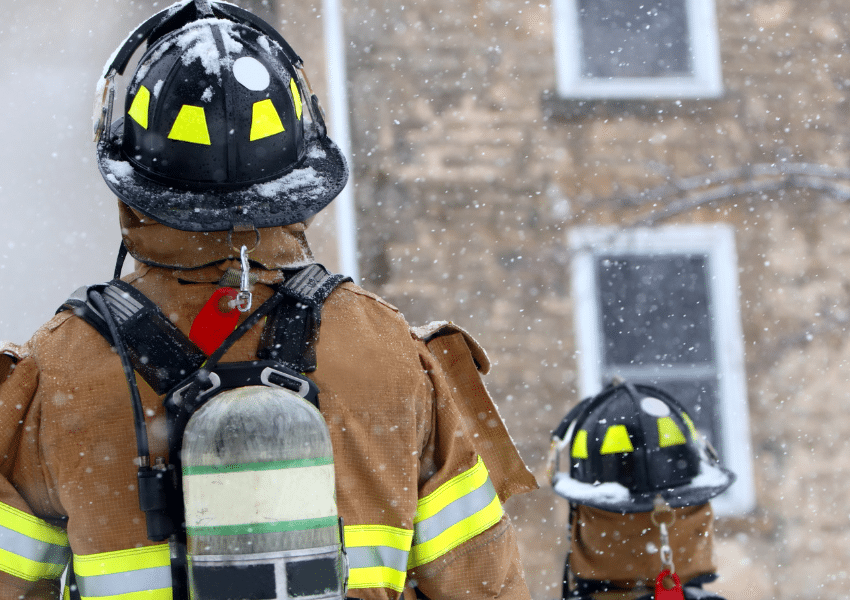
Firefighters don’t get a snow day. While most of us are bundling up and staying indoors, fire crews are battling blizzards, icy roads, and sub-zero temperatures — even while fires burn hot and fast inside buildings. Snow, sleet, hail, and bitter cold don’t just make the job uncomfortable; they complicate every step of a fire response, from frozen hydrants and sluggish water supply to hazardous footing and equipment that doesn’t perform the same in extreme cold.
Firefighting in winter demands more than bravery — it requires planning, adaptability, and a proactive approach before the first flake falls.
Prepare Your Equipment
Cold weather exposes weaknesses in gear quickly. Make sure you have extra hose lengths, hydrant tools, and water supplies readily available. Keep a stock of shovels to manage snow buildup on scene, along with sand or salt to improve footing.
Every crew member should be familiar with the truck’s window defrosters, cab heat, and brake retarders, which are especially important on slick roads. Pump operations require special attention as well. Cold temperatures change how pumps behave, so firefighters need to understand when it’s appropriate to run a pump wet versus dry to avoid freezing damage.
Maintain That Equipment
Winter calls don’t end when the fire is out. After using pumps, ladder pipes, deck pipes, or manifolds, make sure all equipment is thoroughly drained. If possible, this should be done at every shift change to prevent residual water from freezing and causing costly damage. Coating the threads of fittings or port caps with antifreeze can also help prevent freezing and keep equipment operational when it’s needed most.
Coordinate With Other Agencies
Strong communication becomes even more critical in winter weather. Establish clear coordination with Public Works for snow removal on fire station streets and primary response routes. Law enforcement may also need to assist with traffic control, street closures, or removing abandoned vehicles that block access. These partnerships can save valuable minutes during an emergency.
Plan and Use Snow-Removal Routes
Knowing which roads are plowed can make the difference between a quick response and a delayed one. Identify snow-removal routes in advance and use them whenever possible to ensure the safest and fastest access to the scene.
Use Cold-Specific Tactics
Before committing to a water supply, test hydrants to confirm they’re not frozen. Small handheld propane torches can help free frozen hydrant caps or hose couplings when needed.
If a hose line is being used intermittently, keep a slight flow of water moving through the nozzle to prevent freezing. Spread salt on icy surfaces to reduce slip hazards, and secure or brace ladders carefully so they don’t slide during operations.
Be aware that extreme cold affects smoke behavior as well. Smoke tends to stay lower rather than rising, which can significantly reduce visibility — even outside the structure.
Watch for Structural Hazards
Water behaves differently in freezing temperatures. Instead of running off, it may freeze on contact, adding weight and stress to roofs, floors, and other structural components. This increases the risk of collapse and should be factored into tactical decisions.
Ice can also accumulate on ladders, increasing their weight and potentially causing twisting or failure. Monitor ladder conditions closely and adjust operations as needed.
Hydration Still Matters
When it is cold out, dehydration isn’t usually top of mind, but it should be. Cold air, heavy gear, and hard work take a toll on the body, even if you’re not sweating buckets. Firefighters should arrive on scene already well hydrated and keep sipping fluids throughout the operation. A good rule of thumb: aim for about a quart of water an hour during active work, even when the temperatures are low.
Protect Firefighters from Cold Stress and Frostbite
In extreme cold, firefighters can only work outside for short periods before the weather takes a toll. Keep work periods brief and make sure crews take regular breaks to warm up. Gear holds in heat/sweat, so when activity slows, that moisture can quickly make the body cold. This can cause shivering and a dangerous drop in body temperature.
Cold stress affects more than just the body — it affects the mind. As body temperature drops, your ability to think clearly declines, which increases the risk of mistakes and injuries.
Frostbite can happen fast when skin is exposed to severe cold. The skin can freeze, damaging blood vessels and tissue. Because the area may feel numb, firefighters may not realize it’s happening right away. The best protection is prevention: wear loose layers under turnout gear that let moisture escape and always wear two pairs of socks. Limit work periods outside and have access to a warming station.
Support Mental Wellness
The darker, colder months also can take a toll on mental health as well as physical endurance. Fatigue, isolation, and seasonal mood changes are real challenges in the fire service. Make sure your crew knows mental health resources are available and encourage open conversations about stress and well-being.
As winter tests every call and every crew, thank you for answering the call no matter the conditions — and for doing the job that keeps our communities safe. It’s cold out there. Take care of one another and come home safe.
This article is furnished by California Casualty, providing auto and home insurance to educators, law enforcement officers, firefighters, and nurses. Get a quote at 1.866.704.8614 or www.calcas.com.

- Firefighting in Winter - January 28, 2026
- How to Dispose of Batteries - January 26, 2026
- Cool Ways to Beat the Winter Blues - January 21, 2026