
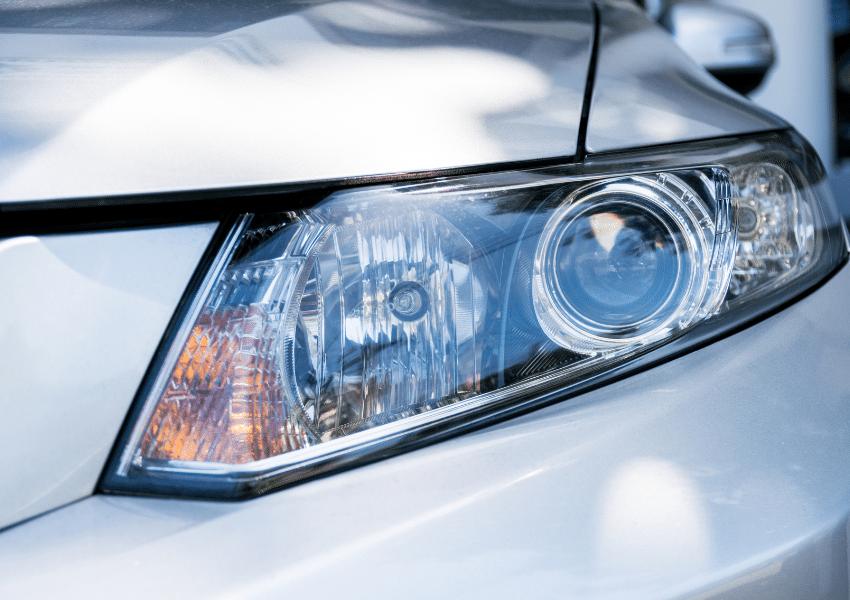
Whether you’re driving down a dark back road, navigating a rain-soaked highway, or flashing your brights to warn another driver, your headlights are doing far more than simply lighting the way. They’re keeping you safe, visible and aware of everything ahead. From classic halogen bulbs to cutting-edge LED, today’s vehicle headlights come in a variety of types — each designed to improve your driving experience in different conditions.
Before we get into the specifics, let’s break down the components that create that important illumination. Headlights are generally defined by three core factors:
- Halogen, HID, LED, or laser: the source of the light
- Reflector or projector housings: the architecture that shapes and directs the beam
- Adaptive systems: the intelligence that moves the light as you drive
Each layer plays a different role, and together they determine how confidently you can read the road ahead — and how clearly other drivers can see you coming.
The Light Source
Halogen Headlights (about 700 lumens)
How they work: When electricity flows through a tiny metal wire inside the bulb, the wire gets extremely hot. Because the bulb is filled with halogen gas, the heat makes the wire glow brightly, creating the light you see from a halogen headlight.
Halogen headlights are the most traditional type and are still common in older vehicles and budget-friendly cars. In setups that use separate bulbs for low and high beams, halogens are often the choice for high beams. Their main advantage is cost — they’re inexpensive to produce and replace. However, they use more energy and don’t last as long as newer lighting technologies.
High-Intensity Discharge (HID) Headlights (about 3,000 lumens)
How they work: HID headlights don’t use a wire to make light. Instead, they create a tiny electrical spark between two metal points inside a bulb filled with special gas. That spark glows extremely bright, producing a strong, efficient beam of light.
HID headlights — often referred to as Xenon headlights if they use Xenon gas — deliver a bright, intense light that makes nighttime driving noticeably clearer. Their distinctive bluish-white glow has made them a popular aftermarket upgrade.
LED Headlights (about 2,000-4,000 lumens)
How they work: LED headlights use tiny electronic components called diodes. When electricity flows through them, the movement of electrons creates light instead of heat. By grouping many of these small LEDs together, manufacturers can produce a bright, efficient, and tightly focused beam for the road.
LED headlights have become the go‑to choice for many modern vehicles—and for good reason. They’re extremely energy‑efficient, long‑lasting, and adaptable. Although they can be more expensive to replace, LEDs typically outlast halogen and HID bulbs by several years, which helps offset the cost.
One of their biggest strengths is flexibility. LEDs can be arranged in complex matrix patterns, allowing both low and high beams to be built into the same housing. Individual sections can brighten or dim independently, working seamlessly with automatic high‑beam assist systems that rely on forward‑facing cameras.
Laser Headlights (Advanced/Limited-Use Technology)
How they work: Laser headlights don’t shine lasers onto the road. Instead, tiny laser diodes fire into a phosphor material, which then produces a very bright white light.
Laser headlights represent the cutting edge of automotive lighting, but their high cost and limited availability mean they’re mostly found in luxury and performance vehicles. Because they generate such an intense beam, they’re usually paired with LED systems and often activate only at higher speeds to extend high‑beam range.
The Shape and Direction
While the bulb creates the light, the housing determines how that light is shaped and aimed.
- Reflector Headlights: Reflector headlights are the old-school standard. Early designs featured a bulb placed inside a reflective steel bowl, covered by a glass or plastic lens. The bowl spread the light, while the lens helped direct it forward. Over time, mirrored surfaces improved beam control and made it possible to replace just the bulb instead of the entire unit.
- Projector Headlights: Projector headlights take things a step further. In addition to the bowl, mirrors, and bulb, they include a magnifying lens that increases brightness and precision. A built-in shield directs the light downward, reducing glare for oncoming drivers. Projector housings can accommodate halogen, HID and LED bulbs, making them a common choice in modern vehicles.
The Intelligence
Adaptive Headlights
Adaptive headlights represent the most advanced lighting systems on the road today. These headlights can adjust brightness, direction, and beam pattern based on steering angle, speed, road conditions, and surrounding traffic. As you turn the steering wheel, the headlights swivel to illuminate curves and corners more effectively — improving visibility while helping to reduce glare for oncoming drivers.
A Word About Headlight Alignment
Even the best headlights won’t perform well if they’re not aimed correctly. Over time, bumps, vibrations, and normal wear can knock them out of alignment, reducing how far and how evenly they illuminate the road.
How to check alignment:
- Park within 5 feet of a wall or garage door.
- Mark the center of each beam with painter’s tape in a cross shape.
- Back up 20–25 feet.
- If the beam no longer lines up with the tape marks, the headlights need adjustment.
For the most accurate results, have a professional handle the alignment.
When to Replace Your Headlights
Halogen bulbs typically last around five years, though this varies with use. Consider replacing or testing your headlights if you notice:
- Dimming or reduced visibility
- Flickering or inconsistent brightness (may point to electrical issues, not just worn bulbs)
- One bulb burning out (the other is usually close behind)
Note that cloudy or yellowed headlight lenses can sometimes be restored with cleaning or polishing kits.
And while proper maintenance goes a long way, having the right insurance adds an extra layer of confidence every time you drive. Safe travels from all of us at California Casualty.
This article is furnished by California Casualty, providing auto and home insurance to educators, law enforcement officers, firefighters, and nurses. Get a quote at 1.866.704.8614 or www.calcas.com.

- Surprising Careers for EMTs - February 27, 2026
- How to Properly Pack Your Fridge - February 24, 2026
- Staying in Control with Driver Assist - February 13, 2026