
Twelve-hour shifts. Miles of hallways. Shoes that feel fine at 7 a.m. and downright traitorous by 3 p.m. For nurses, long hours on your feet come with the job — and yet foot care is often the last thing on the self-care checklist. If your feet are aching, blistered, or begging for mercy by the end of a shift, it’s time to give them the same attention you give your patients.
The human foot is a small marvel: 26 bones, 33 joints, and more than 100 muscles, tendons, and ligaments working together to support your entire body. For nurses, who spend hours standing, walking, lifting, and pivoting, that stress on the body adds up fast. In fact, chronic musculoskeletal disorders affect up to 74% of nurses. The good news? A few proactive habits can go a long way toward keeping your feet healthier, happier, and shift ready.
Stretch It Out (Before and After Your Shift)
Long hours on hard floors place constant stress on your feet, calves, and lower legs. Gentle stretching — during breaks, before bed, and again in the morning — can help improve circulation, release tension, and reduce aches before they turn into pain. You can also make this part of your fitness routine.
Quick stretches you can do during breaks
- Ankle rolls to loosen stiff joints and get the blood flowing
- Calf raises while standing to activate tired muscles
- Toe curls and spreads to engage the small stabilizing muscles in your feet
Target tight calves and Achilles
- Place the ball of your foot on a stair or curb and let your heel gently drop down
- Use a wall calf stretch, stepping one foot back and pressing the heel into the floor
Ease foot fatigue and plantar tension
- Cross one leg over the other and gently pull your toes back toward your shin to stretch the sole of the foot
- Roll your foot over a tennis ball, frozen water bottle, or can of soup to massage tight areas
Wind down before bed — or wake things up in the morning
- Lying on your back, alternate flexing and pointing your feet
- Spend a few moments stretching each foot to release overnight stiffness or post-shift tension
Elevate, Soak, and Moisturize
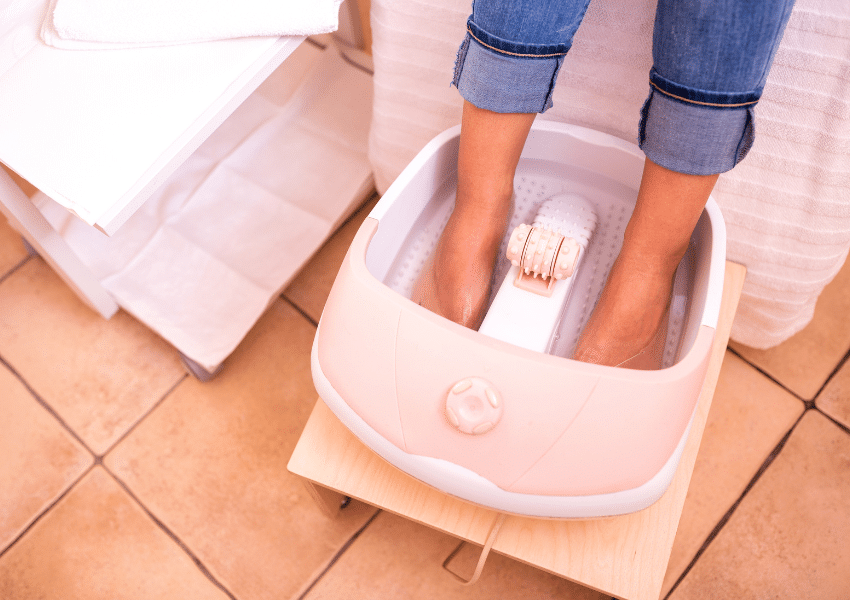
After a long shift, your feet deserve a little TLC. Check your feet daily for dry or cracked skin, especially during colder months. Give yourself a daily soak and don’t forget to moisturize afterward.
- Soak your feet in warm water with Epsom salts for 10–15 minutes to help reduce swelling and improve circulation.
- Apply lotion once or twice a day. Dry skin isn’t just uncomfortable; it can lead to irritation and breakdown.
- Elevate your feet above heart level afterward to ease fatigue.
- Slip into comfy slippers and give your feet a break from structured shoes.
Try Hot-and-Cold Water Therapy
For especially achy feet, alternating temperatures can help stimulate circulation. It’s a simple at-home reset after a demanding shift.
- Soak your feet in warm water, then switch to cold.
- Repeat the cycle a few times, ending with cold to help reduce swelling.
Keep Toenails Trimmed (the Right Way)
Proper nail care helps reduce pressure on your toes and lowers the risk of ingrown toenails.
- Trim nails straight across and avoid cutting them too short.
- Cut them when they’re dry for better control and cleaner edges.
Blisters: Protect First, Treat Carefully
Blisters form when friction causes layers of skin to separate. To help prevent blisters, keep feet dry, choose well-fitting shoes, and consider heel lifts or cushioned inserts to reduce friction in certain areas.
- Small, painless blisters are best left intact and protected with a bandage.
- Large or painful blisters can be safely drained with a sterilized needle, leaving the skin flap to cover the raw skin underneath. They should be kept clean and monitored carefully.
- If there’s concern about infection, or if blisters recur frequently, it’s best to seek medical guidance.
Corns and Calluses
Corns are areas of thickened skin that often develop on toes due to pressure or friction.
- Choose footwear with adequate toe room and rotate shoes to avoid repeated pressure points.
- Never cut corns or calluses, which can lead to infection. Instead, use over-the-counter pads or creams, or gently smooth softened skin with a pumice stone after soaking.
Watch for Digital Deformities & Causes of Pain
Foot issues can worsen over time if ignored. Addressing these issues early can help slow progression and, in some cases, improve alignment. Ask your podiatrist about non-surgical options. In severe cases, surgery may be necessary.
- Bunions appear as a bony bump at the base of the big toe.
- Hammer toes curl or bend when shoes are too tight.
- Crossover toes develop when there isn’t enough space in footwear.
- Ingrown toenails can cause redness, swelling, and pain.
- Plantar fasciitis creates sharp heel pain due to inflammation of the connective tissue running from heel to toes.
Choose the Right Shoes (and Replace Them Regularly)
Supportive footwear is one of the most important investments a nurse can make. Replace work shoes about every six months. Even if they still look fine, foam soles compress over time and lose their cushioning. Look for shoes or sneakers that offer:
- Arch support and stability
- Breathable materials
- Non-skid soles
Don’t Forget Compression Socks
Compression socks help improve circulation by preventing blood pooling and supporting lymphatic drainage. They can reduce leg fatigue and discomfort during long shifts. Choose a pair that fits well — not too tight or too loose — and ends just below the knee.
A little self-care goes a long way. Healthy feet won’t shorten your shifts — but they can make every one of them more manageable.
This article is furnished by California Casualty, providing auto and home insurance to educators, law enforcement officers, firefighters, and nurses. Get a quote at 1.866.704.8614 or www.calcas.com.

- Surprising Careers for EMTs - February 27, 2026
- How to Properly Pack Your Fridge - February 24, 2026
- Staying in Control with Driver Assist - February 13, 2026