The California Casualty team headed to Miami to meet some inspiring educators at the United Teachers of Dade Council of Steward meeting. During our trip, we asked teachers how they thought we could improve education in America. Check out some of their answers in this YouTube clip!
Here are a few of their suggestions:
Get Parents Involved. Steve Goldman, a Government & Economics teacher in Miami, said it best: “Teachers only have them during the day, parents have them the rest of the time.” Check out these tips from the U.S. Department of Education on how you can help your child succeed when the school day is over.
Involve the Community. California Casualty is a proud partner of the education community.We have been providing auto and home insurance to educators for more than 60 years. Be sure to follow @TYeducators on Twitter to hear news and special offers for the education community.
Value our Educators. Teachers give so much, they deserve something back. Over the next year, California Casualty will show how much we value educators by giving away School Lounge Makeovers to four schools. We love thanking our teachers by giving out small gifts and offering insurance that matches their lifestyles. Be sure to follow us on Facebook to hear how we’re giving back to this deserving community.
Join the conversation! How else can we work together to improve education in America?
Springtime is a beautiful time of year – but it also begins the lead up to several dangerous weather related seasons. One such dangerous season is fire season, which runs from summer to fall, and is especially threatening to our western states.
The best time to prepare for fire season is before it starts – so here are some tips to help you stay safe during fire season.
If you live in an area that could be threatened by wildfires, you should make sure you have at safety zone of at least 30 feet around your home, and as much as 100 feet if you live in a pine forest. Are your plants fire-resistant? If not, you might consider replacing them with hardwoods. Regularly clean up fallen leaves, pine needles and other plant debris, especially from underneath structures, and trim away tree branches that could touch your roof or are at least 15 feet from a stovepipe. If any tree branches on your property touch power lines, contact your power company to come have them trimmed.
You can make your own disaster preparedness kit, and store items in an easily transportable container, such as a camper’s backpack or a duffel bag. Your kit should have a first-aid kit, some canned food and an opener, a battery powered radio and flashlight with plenty of extra batteries. You should also have a supply of drinking water; experts recommend about three gallons per person. You might also consider stashing away a small amount of cash in your disaster kit. Some weather resistant clothing – such as ponchos and rain boots – may also come in handy. Include copies of all your most important documentation in the disaster kit, such as insurance policies, wills, birth and marriage certificates, credit card and banking information, titles and deeds to your property. Place these items in waterproof bags in the kit, or in a fireproof safe, if you have one. As a double precaution, send copies of your important documentation to a relative or friend who lives in another state or region.
If you haven’t prepared a household inventory, it is also advisable to do this, and you can do it either with a video camera, a Polaroid or digital camera or by taking notes. Include copies of the tapes or notes in your water- or fire-proof safe havens.
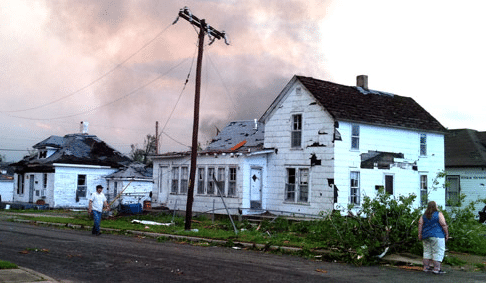
The recent destructive tornado outbreaks in the US caused widespread damage in several states. In the aftermath, once thing most people don’t consider is threats to their financial well-being from identity thieves and fraudsters.
Fortunately, customers of California Casualty have identity theft protection from Identity Theft 911 included in their policies. This benefit can help protect your identity, while also providing guidance and help in recovering your financial peace of mind.
If your home is hit by a disaster such as a tornado or hurricane, we recommend taking the following steps as soon as possible to protect yourself from ID thieves:
Protect important information and documents. Whether you’re in a shelter, staying with friends and family, never let these items leave your sight. They are the keys to your identity-and you will need this information to prove who you are.
Ask the post office to hold your mail until you return home. This will keep thieves from finding sensitive materials that are left in your mailbox.
During disasters criminals often prey on the emotions of citizens. Verify against scam charities by using Give.org or CharityNavigator.org.
If you have any reason to believe that your personal information may have been exposed or is at risk, please contact our customer service line at 1-800-800-9410 if you’re a CalCas customer and we’ll put you in touch with IDT911.
In many areas, the weather has been pretty good so far this year. But, this week started a flurry (pun intended) of winter weather, and I thought it would be a good time to recap some important safety tips for cold weather!
What to do when your pipes freeze – It happens to the best of us (or, at least, it happened to me!). A quick guide to getting your pipes thawed without flooding your house.
Carbon monoxide safety – Firing up your heaters can lead to hidden dangers. Here are some tips for CO prevention.
Driving Safety in Snow and Ice – When the snow and ice come down, the roads get slippery. Here are some tips for making that commute safely.
If your high school athletic program is struggling due to budget concerns, you may want to apply for a California Casualty Thomas R. Brown Athletics Grant – but quickly. The deadline is February 15, 2012.
Check out this interview with our CEO Beau Brown from Jeff Fisher, founder of High School Football America. Click to listen
“We want to ensure that as many schools as possible are considered,” said Doug Goldberg, Senior Vice President for the company.
Following a successful inaugural year, the 2012 California Casualty Thomas R. Brown Athletics Grant program will distribute a total of $75,000 in grants of $1,000 or more to support public high school athletics programs across the nation..
California Casualty established the grants program because education budget cuts have drastically reduced support for school athletics, in some cases forcing programs to shut down altogether. Chairman Thomas R. Brown experienced the positive impact of playing sports as a youth. “Athletes learn teamwork, discipline and that hard work pays off,” he said. “They’re a valuable complement to what’s learned in the classroom.”


 In many areas, the weather has been pretty good so far this year. But, this week started a flurry (pun intended) of winter weather, and I thought it would be a good time to recap some important safety tips for cold weather!
 If your high school athletic program is struggling due to budget concerns, you may want to apply for a California Casualty Thomas R. Brown Athletics Grant – but quickly. The deadline is February 15, 2012.