by California Casualty | Nominate a Hero |
Voting is now closed! You may still share the heroes’ pages, but votes will not count. Congratulations to Officer Mansfield, he is our August Hero of the Month! Stay tuned as we announce the finalists for September!
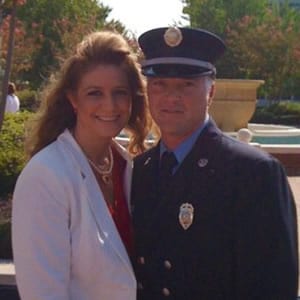
Michael knew he wanted to be a firefighter from a young age. His family says he has always had the compassion and drive to help people. Michael got his start around the fire community when he served as a Police, Fire and EMT dispatcher. He used the experience to start learning about firefighting. From there, Michael joined the Fort Smith Fire Department, where he served for 11 years.
While working for the fire department in July 2009, Michael got a call that changed his life. He was called to a two-story building on fire-with two people trapped inside. Michael immediately rushed into the burning building to rescue both men. One man managed to escape, but the other was unconscious due to smoke inhalation.
Michael was able to pull the man from the burning building. He was rushed to the hospital, and recovered after a few weeks. During the rescue, Michael sustained severe shoulder injuries, leading to multiple surgeries and eventual retirement. He then went on to start a company with his wife.
by California Casualty | Nominate a Hero |
Voting is now closed! You may still share the heroes’ pages, but votes will not count. Congratulations to Officer Mansfield, he is our August Hero of the Month! Stay tuned as we announce the finalists for September!
LaVees’ coworkers and friends say that ‘Best’ is more than just her last name- it also perfectly describes her care for the teaching profession and her students. LaVees started her teaching career at a middle school with many social-economic challenges. Wanting to motivate and reward her students, she took it upon herself to create student recognition programs. She also served as the Associate Student Body Advisor.
In just three short years, coworkers say she transformed and organized student programs into much-needed ‘student affirming machines.’ Now working at the high school level, LaVees is frequently visited by past students hoping to catch up or share their successes with her. Her personal determination as an educator to make a difference has transformed LaVees to be an inspirational role model. Now teaching in the English department, she has broadened her school’s range of literature. Her coworkers say LaVees ‘moves forward with deep conviction about the possible impact she could make on both students and staff.’ From all accounts, she is making quite the impact indeed.

by California Casualty | Nominate a Hero |
Voting is now closed! You may still share the heroes’ pages, but votes will not count. Congratulations to Officer Mansfield, he is our August Hero of the Month! Stay tuned as we announce the finalists for September!
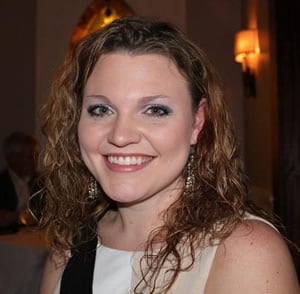
Emily has been working as a Trauma and Burn Intensive Care Unit nurse for 3 years now. Emily had such a huge impact on one of her patients and his family, multiple family members wrote to us about this extraordinary nurse.
It all started when the victim, a young man about Emily’s age, was admitted to the hospital. He was unconscious and had no family present at the time. Not wanting him to be alone or his family to worry, Emily and her charge nurse got to work searching for clues on how to find and alert his family.
They were able to track them down, and they immediately traveled the 120 miles to visit their son in the hospital. Throughout the patient’s stay, Emily cared for him and his family as she would want someone to do for her. Even though the patient was still unconscious and in a coma, Emily talked to him frequently, kept him company, and encouraged his family to do the same.
With all of this happening right at Christmas time, Emily said she could not imagine the family’s stress. Emily remained right by their side, checking in on her own time, bringing Christmas baked goods, and comforting the family to her best ability. His mother and grandmother remember how gentle, patient, and caring Emily was throughout the whole experience by easing their fears and calming their nerves. Emily says she takes pride in getting to know people on a personal level.
Knowing she has impacted someone’s life positively is what she loves about her job. As for the patient’s family, they could not say enough positive things about the incredible difference Emily’s beyond-the-call care made in their lives.
by California Casualty | Nominate a Hero |
Voting is now closed! You may still share the heroes’ pages, but votes will not count. Congratulations to Officer Mansfield, he is our August Hero of the Month! Stay tuned as we announce the finalists for September!
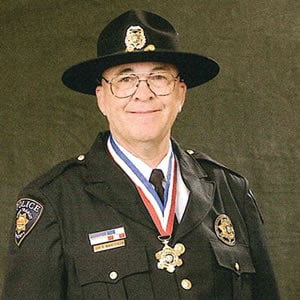
Officer Mansfield started his career in law enforcement officer at the age of 25, and now has been serving his community for more than 37 years. Before retiring in 2012, he served with the North Salt Lake Police, Woods Cross Police, Salt Lake County Sheriff’s Office, Adult Probation and Parole, the Midvale City Police, and Utah Transit Authority Police Department.
Colleagues and Family say that he is trustworthy, honest, sincere, and has always stood up for those in danger. In one particular case, Officer Mansfield stopped theft of arcade tokens used for boarding transit trains and his investigation led to eight arrests. Officer Mansfield has suffered multiple injuries in the line of duty, including a life-threatening gunshot to the leg.
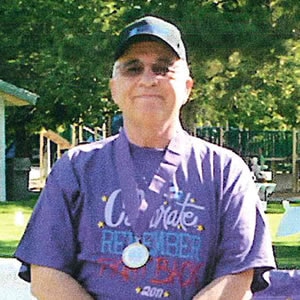
He stays busy as a security officer and volunteer Chaplain at the local children’s hospital. He also serves as Chaplain of his local American Legion Post. Officer Mansfield is active in many community activities, also active in several cancer support groups, as he is a cancer survivor himself. He has received many awards, including a Purple Heart and the Medal of Valor for saving a fellow officer’s life.
by California Casualty | Firefighters |
This Guest Blog post is from the National Volunteer Fire Council. It is the featured article in our Firefighter & EMT News Resource: Flashpoint. To sign up to receive Flashpoint in your inbox once a month, click here!
Prevent Tragedy by Focusing on Behavioral Health in the Fire Service
Behavioral health. It’s a subject not often talked about in the fire service, but it affects every department and emergency responder in some way or other. In a culture that frequently brushes aside how they are feeling, this is a hard subject to tackle. Yet behavioral health issues are just as serious as physical health and safety issues, and can be just as deadly if left unaddressed.
Behavioral health can cover a wide spectrum of health issues for firefighters and emergency responders. These can include stress or anxiety, sleep problems, depression, post traumatic stress disorder, and addiction, to name a few. If left untreated, many of these issues could result in serious or life-threatening physical health disorders, such as heart disease or high blood pressure. Some could also lead to safety concerns as firefighters are less prepared to do their jobs safely and to the best of their ability if they are battling one or more of these issues. In many instances, untreated psychological conditions could lead to firefighter suicide, a tragedy for the firefighter, their family, the department, and the entire fire service community.
Firefighters and EMTs respond to the worst crises – fires, traffic accidents, family abuse, shootings, and more. At the same time, they are balancing the needs of the fire department, their families, other outside interests, and in the case of volunteers, full time jobs. Add to the mix unpredictable sleep schedules, potential for unhealthy eating habits and lack of time for proper fitness, and a culture where talking about one’s feelings or difficulties may not be accepted, and it is no wonder that emergency responders have an increased risk for having one or more behavioral health concerns.
What Can Be Done
It is critically important that department leadership makes behavioral health as much of a priority in the department as physical health and safety. Having resources available to firefighters and EMTs who need help, creating a culture where talking about issues is encouraged, and breaking the stigma associated with behavioral health issues can provide the support a firefighter needs to seek treatment and prevent tragic outcomes such as suicide.
Mandatory behavioral health training is a critical first step in adopting a proactive approach within the department. Having effective retirement planning procedures in place is also important as many firefighters suffer from stress, depression, loss of identity, or other negative effects when faced with leaving the fire service after dedicating their lives to it.
Other proactive measures include having an Employee Assistance Program available to all department members, having workshops where counselors or other qualified entities (CISM teams, chaplains, training officers) address potential issues and how to recognize signs and symptoms of distress, and encouraging all fire academies to include at least four hours of behavioral health training for cadets.
Resources Available
In recent years, the fire service has started to become aware of how serious behavioral health is for emergency responders. The Firefighter Behavioral Health Alliance (www.ffbha.org/) has collected information on 334 firefighters and 18 EMTs/Paramedics that have committed suicide. Departments have also begun to notice the wide range of negative outcomes that can result from ignoring behavioral health.
Fortunately, many resources are available to help departments and individuals address these issues and prevent potential negative outcomes.
Check out some of these resources- and click on the blue title to link to them!
National Fire Services Member Assistance Program
This toll-free hotline is available to all firefighters, EMS personnel, and their families who need immediate assistance with any problems affecting work or personal life, such as stress, depression, alcohol or drug addiction, financial management difficulties, critical incidents, relationship problems, work-related concerns, and more. Trained firefighters and counselors familiar with the fire and emergency services are available 24/7. Call 1-888-731-FIRE (3473) for help.
Firefighter Life Safety Initiative 13 – Behavioral Health
Initiative 13 of the National Fallen Firefighters Foundation’s Life Safety Initiatives focuses on the psychological wellbeing of firefighters and their families. The new Initiative 13 web site contains important resources, training, and research, including the new model for exposure to potentially traumatic events and stress aid for fire and EMS personnel, which recognizes that not everyone responds the same to traumatic events.
Suicide in the Fire and Emergency Services: Adopting a Proactive Approach to Behavioral Health Awareness and Suicide Prevention
This report from the National Volunteer Fire Council explores the various behavioral health concerns faced by first responders and identifies resources and best practices for mental wellness and suicide prevention.
Preventing and Coping with Suicide in the Fire and Emergency Services
The National Volunteer Fire Council, with support from the U.S. Fire Administration (USFA), developed this online training course focusing on suicide awareness and prevention. The course contains three modules that examines the signs and symptoms preceding suicide, highlights available resources for departments and individuals, and discusses the healing process when coping with a firefighter suicide. New students must create an account before registering for the course.
Behavioral Health Resources
The focus of the 2013 International Fire/EMS Safety and Health Week was behavioral health. This web site provides a lengthy resource and training listing to help firefighters and their departments focus on behavioral health and well-being.