
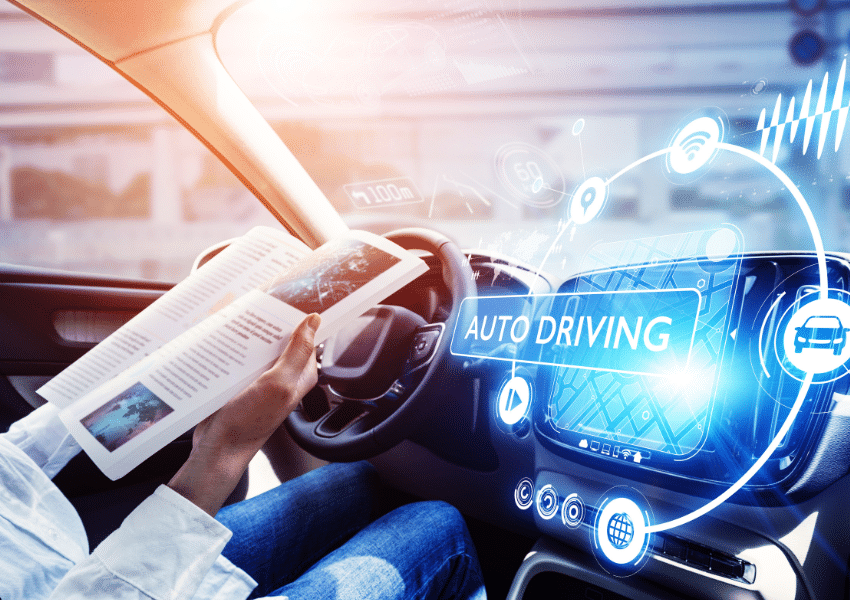
A few beeps, a gentle tug on the steering wheel, a sudden tap on the brakes — it can feel a little like magic the first time your car steps in to help. What once sounded like futuristic wizardry is now woven into the fabric of everyday driving. From lane departure warnings and blind spot alerts to automatic braking, driver assist technology is designed to act as an extra set of eyes — and sometimes reflexes — on the road.
Let’s take a closer look at the technologies that are quietly changing the way we drive.
Adaptive Cruise Control
Unlike traditional cruise control that maintains a steady speed, adaptive cruise control adjusts your speed to keep a safe following distance from the car ahead. If traffic slows, your vehicle slows. When it clears, your vehicle speeds back up to your preset speed.
Adaptive Headlights and Automatic High Beams
As you turn the steering wheel, some headlights move with you, lighting up the road around curves so you can see what’s ahead. Automatic high beams turn themselves on when the road is dark and switch off when they sense other cars nearby, so you get better visibility without blinding other drivers.
Automatic Crash Notification
If your airbags go off or your car is hit hard, the system can automatically call for help and share your location with emergency responders — saving precious time when it matters most.
Backup and Surround Cameras
This technology gives you a clearer view behind and around your vehicle. This helps to prevent collisions and “back-over” crashes, especially involving children who may be unknowingly traveling behind your car as you back out. But remember, cameras are supplemental. It’s still important to check your mirrors and turn your head for a quick visual.
Blind Spot Monitoring
Sensors scan areas you can’t easily see. If a vehicle is riding in your blind spot, you’ll see a light in your side mirror or hear a warning if you signal to change lanes. Some systems will even apply light braking or guide you back into your lane if you begin to move over.
Forward Collision Warning & Automatic Emergency Braking
These systems monitor your speed, the speed of vehicles ahead, and the distance between you. If you’re closing in too quickly, you’ll get a warning. If you don’t respond in time, automatic emergency braking can apply the brakes to help reduce or even avoid a crash. Some systems also detect pedestrians in your path.
Lane Departure Warning and Lane Keeping Assist
Cameras watch the lines on the road. If you start to drift out of your lane without signaling, the system will alert you — usually with a beep, vibration, light, or steering wheel nudge. Some vehicles go a step further with lane keeping assist or lane centering, which gently steers you back into position or keeps you centered as you drive. Think of it as guidance, not autopilot.
Parking Assist
Parallel parking assist systems use sensors and cameras to identify a space and control the steering. In some vehicles, the system also handles braking and acceleration.
Rear Cross Traffic Alert & Rear Automatic Braking
Backing out of a parking space? These systems alert you if a car, cyclist, or pedestrian is approaching from the side — even if you can’t see them in your backup camera. If necessary, the vehicle may brake automatically.
Where Technology Has Limits
Driver assist features are impressive, but they’re not perfect. Here are some of the limitations that drivers have reported.
- Cameras and sensors can be blocked by snow, ice, dirt, or heavy rain.
- Adaptive cruise control may not react quickly if another driver suddenly cuts you off.
- Blind spot monitoring may miss vehicles approaching at very high speeds.
- Lane systems can struggle with faded lane markings, sharp curves, construction zones, or unusual traffic patterns.
How to Use Driver Assist Safely
To get the most benefit from these features:
- Stay engaged. Keep your eyes on the road and your hands ready. Driver assist is not self-driving.
- Avoid distractions. Phones, food, and playing with screens reduce your ability to respond if the system alerts you.
- Know your vehicle. Read your owner’s manual so you understand what your specific model can — and cannot — do.
- Maintain your car. Keep cameras and sensors clean, especially in winter weather.
- Keep using your driving skills. Check mirrors. Look over your shoulder. Scan the road ahead. Technology supports good habits — it doesn’t replace them.
Driver assist technology – and similarly teen driver monitoring apps — have the potential to reduce crashes and save lives. Used wisely, this technology adds a powerful layer of protection. But the most important safety feature in any vehicle is still the person behind the wheel. Stay alert. Stay informed. And let technology work with you — not instead of you.
And because even the best technology can’t prevent every accident, make sure your vehicle is protected with the right insurance for added peace of mind. Safe travels.
This article is furnished by California Casualty, providing auto and home insurance to educators, law enforcement officers, firefighters, and nurses. Get a quote at 1.866.704.8614 or www.calcas.com.

- Surprising Careers for EMTs - February 27, 2026
- How to Properly Pack Your Fridge - February 24, 2026
- Staying in Control with Driver Assist - February 13, 2026