
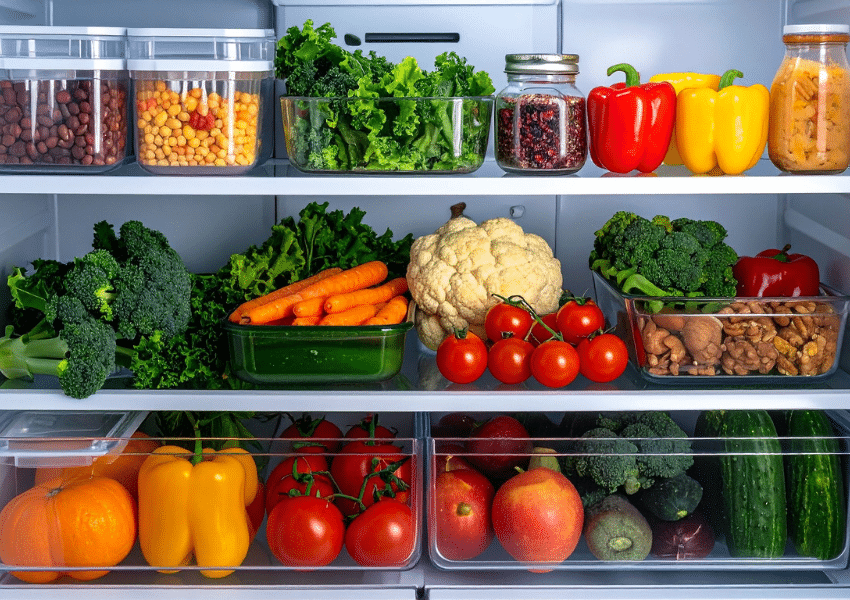
You open your fridge looking for a quick snack…and are met with a game of culinary Jenga. Between buried produce, mystery leftovers, and milk hiding behind condiments, it’s easy for things to spiral into chaos. The good news: A few smart placement tweaks can help you waste less, save money, and make everyday meals easier. Let’s break it down.
First, Know Your Fridge Has “Zones”
Your refrigerator isn’t one big cold box. It contains warmer and colder areas, along with spots that are more humid and less humid. Understanding these zones is the foundation of smarter food storage.
- Coldest areas: the back of the fridge and bottom shelves
- Warmest areas: the door shelves, which get frequent temperature swings
- Humidity-controlled areas: crisper drawers designed to preserve produce
When you store foods in the right zone, you help them stay fresh longer and reduce the risk of spoilage or foodborne illness. It’s not about perfection — just putting foods where they naturally last longer.
Create a Simple System Everyone Can Follow
Even the best system won’t work if you’re the only one who knows it. A few small visual cues can make organization stick for the whole household.
- Use binder clips with labels to mark shelves (“Dairy,” “Snacks,” “Leftovers”).
- Keep similar foods together so you always know where to look.
- Designate an “Eat First” space or bin for items nearing expiration and keep it front and center.
That last habit alone can dramatically cut food waste and prevent those fuzzy leftovers from being rediscovered weeks later. It also protects your other contents. Food that turns moldy will produce spores which can spread to other items in the fridge.
Where Foods Actually Belong
Bottom shelf (coldest spot)
This is the safest place for raw meat and poultry. Because these items can leak, storing them low prevents contamination of other foods. The colder temperature also slows bacterial growth, so food lasts longer.
- Keep meat in sealed containers or trays to catch drips.
- Consider lining the shelf or bin for easier cleanup.
Lower shelves
These areas are ideal for dairy products such as yogurt, sour cream, and cottage cheese. Milk belongs here too — not in the door — because consistent cold helps it last longer.
Middle shelves
This is the most stable temperature zone in the fridge.
- Store eggs here rather than in the door.
- Keep leftovers and prepared foods together so they’re easy to find and rotate.
- Clear containers help you quickly see what’s inside.
Crisper drawers
These drawers are specifically designed to control moisture. Make sure to separate fruits and vegetables. Many fruits release ethylene gas, which speeds up ripening and can cause vegetables to spoil faster.
- Vegetables typically prefer the high-humidity drawer.
- Fruits do better in the low-humidity drawer.
Pro tip: Skip washing produce before storing it. Extra moisture speeds up spoilage. Wash just before using instead.
The Fridge Door
Because the door warms up every time it opens, it’s best reserved for foods that can handle temperature fluctuations.
Good door items:
- Condiments
- Nut butters
- Pasteurized juices
- Jams, jellies, and pickled products
Avoid storing here:
- Milk
- Eggs
- Highly perishable dairy or meats
Pro Tip: Place the bottom of an empty egg carton on a door shelf to hold upside-down condiment bottles. It keeps them upright and helps you use every last drop.
Make Your Fridge Work for Your Life
Organization isn’t just about neatness — it’s about making your fridge easier to use every day.
- Create a kid-friendly snack zone with fruit, yogurt, or cheese sticks within easy reach.
- Use a rotating Lazy Susan so jars don’t disappear in the back.
- Try clear bins to store items and group like items together.
When everything is visible and accessible, food is more likely to get eaten instead of forgotten.
Smart Space-Saving Tricks
If your fridge always feels overcrowded, a few small adjustments can create surprising breathing room. These tricks improve airflow, which helps maintain even cooling throughout the fridge.
- Place a baking sheet over a casserole dish to create a temporary extra shelf.
- Remove bulky cardboard packaging and store foods in labeled containers instead.
- Clip cooking instructions or expiration info from boxes and keep them with the item.
Don’t Forget the Freezer
Your freezer deserves the same attention as your fridge.
- Label and date everything before freezing.
- Freeze foods in meal-sized portions for easier thawing.
- Keep a running freezer inventory so you don’t buy duplicates.
Also, your freezer is not the best place to stash valuables, contrary to popular opinion.
Habits That Keep It Organized
Packing your fridge properly once is helpful but maintaining it is what really pays off.
- Keep your fridge no more than about 75% full so air can circulate.
- Do a quick five-minute cleanout before grocery shopping.
- Store newer items behind older ones so the older foods get used first.
- When unsure what to cook, “shop your fridge” before planning a meal.
Pro Tip: Some apps even help you build recipes from what you already have, turning leftovers into easy dinners.
Your fridge doesn’t have to be perfectly packed. But trying some of these tips can make your food safer, your groceries last longer, and your daily routine simpler. Bon appétit!
This article is furnished by California Casualty, providing auto and home insurance to educators, law enforcement officers, firefighters, and nurses. Get a quote at 1.866.704.8614 or www.calcas.com.

- Surprising Careers for EMTs - February 27, 2026
- How to Properly Pack Your Fridge - February 24, 2026
- Staying in Control with Driver Assist - February 13, 2026