by California Casualty | Safety |
Car crashes are the number one killer of children 1 to 12 years old in the United States.
As part of National Preparedness Month, today we will be talking about Car Seat Safety (it’s also National Child Passenger Safety Week!)
Just how important is making sure your child is buckled in correctly to an age and size appropriate car seat?
On average, 2 children are killed and 325 are injured in car accidents every day.* This fatality rate could be reduced by about half if the correct child safety seats were always used.**
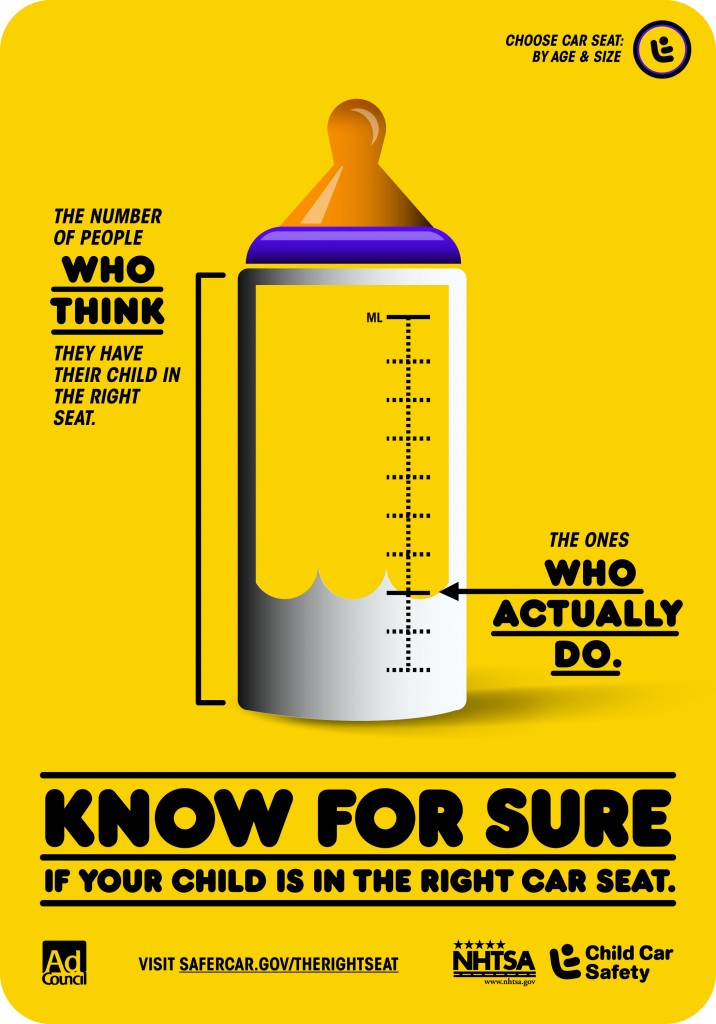
So how can you check to make sure you are using the correct car seat in the correct way for your child?
Check out these great recommendations for car seats and boosters as well as installation and maintenance tips.
To make sure your child’s seat is the correct one installed in the correct way, you should have it inspected by a certified technician. Often, these certifications are free. You can find a location close to you by clicking here.
We also wanted to share a great tip with you that we found and shared on our Firefighter Pinterest board. It started with this photo:
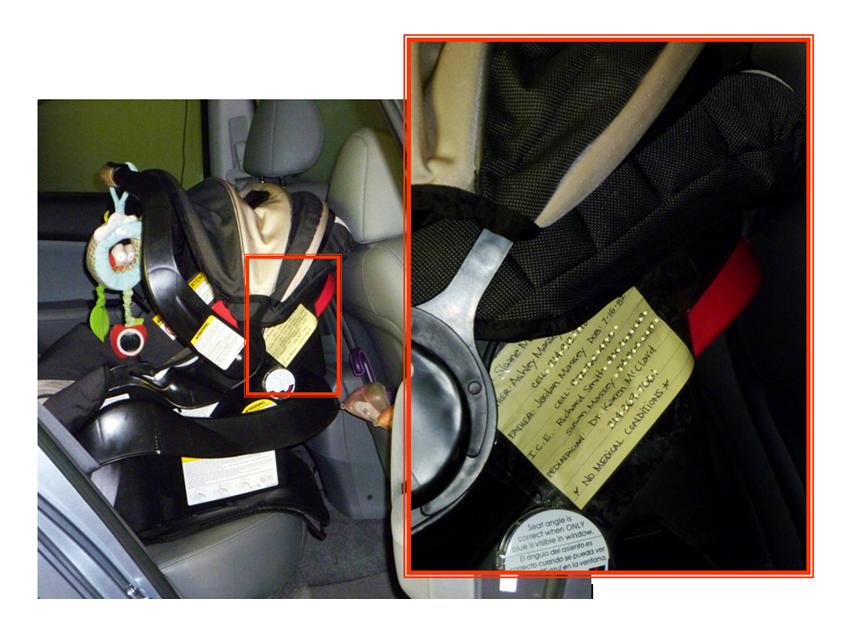
In this photo, you can see the parent has attached Emergency Contact and Medical Information.
When we found this Pin, it was shared by a Firefighter/Paramedic. He commented that this kind of information is critical in the event of a car crash. In case the driver is separated from the child or otherwise unable to communicate medical information to First Responders, securing vital information to a car seat will help provide EMTs with potentially life-saving information.
While some newer car seats come with a spot for this information, many do not. Even if your child’s car seat does not have a specific spot for this info, you can secure it to the seat yourself. Simply write up the information (we recommend using bright or neon paper so it’s more noticeable) and use waterproof, clear tape to secure it to your car seat.
Here are some suggestions on what to include:
- Child’s Name
- Date of Birth
- Parent Identification and Contact Information (Names and Phone Numbers)
- Emergency Contact Information (Name and Phone Number)
- Primary Physician/Pediatrician Information
- Any known medical conditions
- Any known allergies
- Any relevant medical information
No matter how safe of a driver you are, remember that there are other drivers on the road and that accidents happen every day. Help safeguard your child’s safety by having your car seat inspected and by securing contact and medical information to your child’s car seat.
Sources:
*Based on National Highways Traffic Safety Administration c2010 Crash Data
**Based on the latest mortality data currently available from the CDC’s National Center for Health Statistics
by California Casualty | Nominate a Hero |
Can’t wait to tell you guys more about what we have in store for next year…
by California Casualty | Auto Insurance Info, Safety |
Car accidents happen.
Whether it’s a fender bender or a pileup, your fault or someone else’s, they just happen.
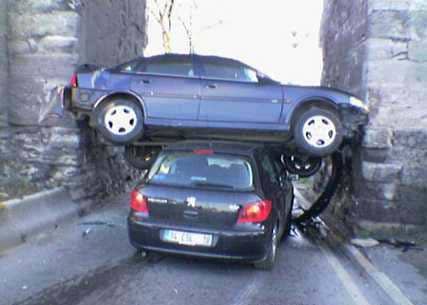
So when we talk about preparedness during National Preparedness Month, car wrecks should be on your list of scenarios for which you are prepared and ready.
Because how you act following a car wreck won’t just affect the Insurance Claims process, it could affect the safety and security of yourself, your property and your identity.
Did you know that sharing some personal information could put you at risk for identity theft following a car accident?
Check out this information from a 2012 National Association of Insurance Commissioners survey:
- Thirty-eight percent of consumers believed they should share their driver’s license number with the other driver — one in six would even allow the other driver to photograph the license as a convenient way to exchange information.
- So what’s the risk? Many retailers accept driver’s license information to verify your identity over the phone. In fact, your license number is the most common way to confirm your identity after Social Security number and date of birth.
- Twenty-five percent of consumers surveyed said they would share their home address.
- So what’s the risk? Actually, your home address gives identity thieves the physical location of your mail or garbage, the first place criminals often look for personal financial information. And, now a stranger knows where you live, possibly putting your personal safety at risk.
- Twenty-nine percent of survey respondents believed they are required to share personal phone numbers. In fact, sharing your phone number is rarely necessary.
To help you take some of the guesswork out of what to share and what to safeguard following an accident, the National Association of Insurance Commissioners released an app for Smartphones called The WreckCheck App.
- It’s free of charge!
- Works for iPhones and Android phones
- Outlines what to do following an accident
- Walks you through process of creating accident reports
- Tells you which pictures to take
- Helps document damage
- Assists in attaining and sharing only necessary information
- Allows you to email completed reports to yourself or Us (your insurance company!)
For more information on how to download or use the WreckCheck App, click here.
by California Casualty | Safety |
It’s officially September!
Goodbye Summer sunshine, hello Fall foliage!

Aside from being the season of cider and sweaters, Fall is also…
National Preparedness Month.
Here at CalCas, we will be celebrating by posting weekly Preparedness content right here on our Blog 🙂
First on deck: A Preparedness App!
As a recent iPhone converter, I am all aboard the App train. I’m always on the lookout for exciting new stuff and this new app from the Insurance Information Institute is one such find!
It’s called the “Know Your Plan” App and it’s all about streamlining your Disaster Prep Plans.
What you should know about this App:
What it provides:
- A library of preloaded preparedness checklists for disasters including:
- Hurricanes
- Floods
- Earthquakes
- Tornadoes
- Severe Cold
- Wildfires
- Evacuation
- Tips for preparing an emergency kit
- Important property protection information
- Step-by-step preparedness tips
- Custom lists for your personalized preparedness plan
- Targeted task completion dates
- Tools to chart your progress (including a countdown feature!)
- Checklists share options for family and friends
- Evacuation resources (even one for pets!)
- Geotargeted emergency alert feeds for up-to-the minute information about local evacuation routes and other disaster information
- User-customizable notes
As Fall and September swing into full gear, make sure you are ahead of the curve when it comes to Disaster Preparedness.
After all, you never know when you may need it.
By compiling disaster preparedness information and plans all in one place–on your phone–you are putting life-saving plans in place.
Stay tuned for more great Preparedness content throughout the month!